


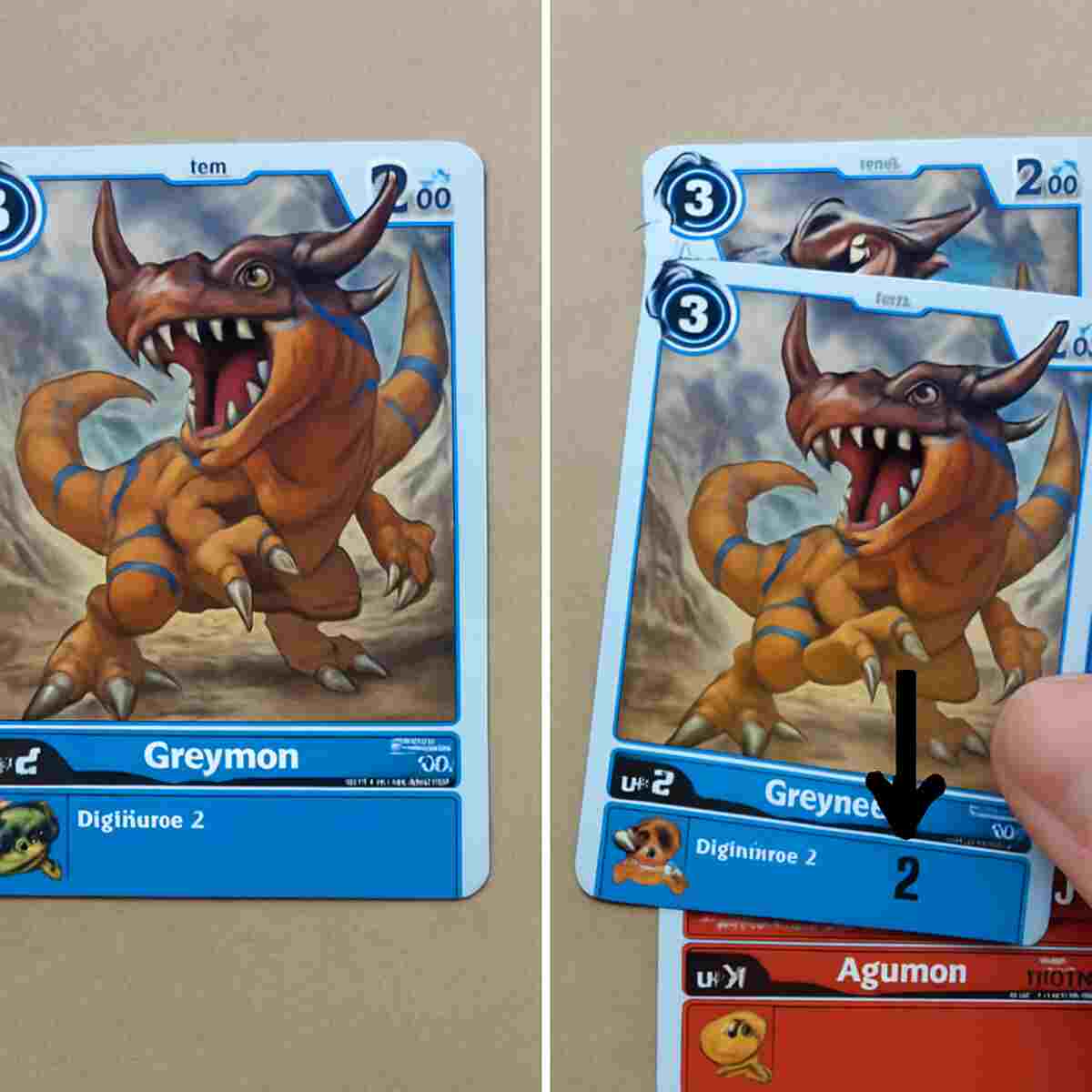
Remember the thrill of watching Agumon digivolve into Greymon for the first time? That feeling of growing power is the very heart of the Digimon card battle online game. But unlike many games where you simply chip away at a health number, victory here is about something different. To win, you must methodically break through your opponent’s “Security,” a stack of five hidden cards that acts as their final line of defense before you can land the final blow. The Interesting Info about casino zonder cruks ideal.
Most card games give you a set amount of energy each turn. What if your turn only ended when you gave that energy to your opponent? The world of Digimon trading cards is built on this very idea, centered around a unique “Memory Gauge.” This system creates a constant tug-of-war, where every play is a critical decision that could give your opponent the exact resources they need to counter you.
Building up your partner is just as important as managing that shared Memory. In this game, Digivolving isn’t just for show—it’s a core mechanic where you physically stack new, stronger cards on top of your existing Digimon. Doing this not only unlocks powerful new abilities but also makes them cheaper to play, allowing you to build an unstoppable force without handing too much Memory to your rival.
Feeling a little overwhelmed? Don’t worry. This Digimon card game tutorial for beginners is your step-by-step blueprint to mastering the fundamentals. We’ll demystify the Memory Gauge, explain exactly how your Security works, and show you how to Digivolve your partners into champions, giving you the confidence to dive into your first match.
Table of Contents
How Do You Win? Understanding the Security Stack and Setting Up Your First Game
Unlike many card games where you attack a player’s life points directly, the goal in the Digimon Card Game is to land one successful attack after your opponent’s defenses are gone. These defenses are known as the Security Stack, which you can think of as your health bar. It’s a pile of five face-down cards taken from the top of your deck at the start of the game. Each time your Digimon attacks, it “checks” one of these security cards, removing it from play. Once all five are gone, a final, direct hit wins you the match!
Getting your digital battlefield ready is quick and helps you learn the essential zones of the game. Your play area has designated spots for your main deck, your discard pile (the Trash), and your Security Stack. To set up for any game, just follow these simple steps:
- Shuffle your main Deck (a 50-card pile).
- Place the top 5 cards from your Deck face-down to form your Security Stack.
- Draw the next 5 cards to create your starting Hand.
- Place one Digi-Egg from your separate Digi-Egg Deck face-down into your Breeding Area.
With your board set, you have cards to play, a Digi-Egg waiting to hatch, and a clear objective: clear your opponent’s Security. This dynamic is controlled by the game’s most unique feature: the tug-of-war known as the Memory Gauge.
The Tug-of-War: Why the Memory Gauge is the Heart of the Game
Forget everything you might know about gathering your own private pool of energy each turn. The Digimon Card Game revolves around a shared resource bar called the Memory Gauge, which you can see at the bottom of the game screen. The best way to picture it is as a constant tug-of-war. Every action you take pushes a resource marker toward your opponent, and every action they take pushes it back toward you.
At the start of your turn, the marker will always be set to at least 3 on your side of the gauge, giving you a budget to work with. Every card you play has a Memory Cost, which is the number shown in the top-left corner. For instance, to play a basic Agumon from your hand, you might pay its cost of 3. When you do, the marker on the gauge slides 3 spaces toward your opponent’s side.
Here is the most important rule in the entire game: your turn ends the instant the Memory marker crosses the ‘0’ in the middle and lands on your opponent’s side. If you have 3 Memory and play that 3-cost Agumon, the marker lands on 0, and you can keep taking actions. But if you play a card that costs 4, the marker moves to ‘1’ on their side. Your turn is immediately over, and your opponent now begins their turn with 1 Memory you just gave them.
This dynamic creates a fascinating strategic puzzle on every turn. Do you make a huge, game-changing play even if it means giving your opponent 5 or 6 Memory to retaliate with? Or do you make smaller, efficient moves to leave them with only 1 Memory, hoping to limit their options? This constant balancing act makes every match unique and exciting. The next step is learning about the cards you’ll be spending that Memory on.
Your Digital Arsenal: The Three Core Card Types You’ll Use
Most of your Memory will be spent on bringing your partners into the fight. These are your Digimon cards, the creatures that will battle for you. Each one has a DP (Digimon Power) value, which is essentially its attack strength. A stronger Digimon with higher DP can defeat weaker ones in battle. These are the primary cards you’ll use to attack your opponent, building them up from rookies into powerful mega-level threats.
Beyond just summoning Digimon, you can also use Option cards. Think of these as powerful, one-time special moves or events. You pay their Memory cost, trigger their effect—like deleting an opponent’s Digimon or drawing extra cards—and then the card is sent to your discard pile. They provide a sudden burst of power or utility that can swing the momentum of the game in an instant.
Finally, you have allies on the sidelines in the form of Tamer cards. These represent the human characters from the series, like Tai Kamiya or Matt Ishida. Instead of fighting, Tamers stay on the field and provide continuous benefits, such as guaranteeing you start your turn with more Memory. Crucially, Tamers cannot be attacked, making them a safe and reliable investment to support your Digimon and execute your long-term strategy.
The Safe House and The War Zone: Using the Breeding Area and Battle Area
Worried about your weak, freshly-played Digimon getting knocked out immediately? The game has you covered with a special zone called the Breeding Area. Think of it as a safe house or a nursery. At the start of the game, and whenever it’s empty, you can begin the process of hatching a Digi-Egg here for free. This gives you a Level 2 Digimon that your opponent cannot attack or even target with effects. It’s the perfect, protected space to prepare your next partner for the fight ahead.
Once you’re ready to enter the fray, you can move a Digimon from the Breeding Area into the main play zone, called the Battle Area. During your turn’s Main Phase, you can perform this move as a free action. However, this is a one-way trip. As soon as your Digimon enters the Battle Area, it’s in the war zone—it can now be targeted and attacked by your opponent, but it can also finally join the fight on your behalf. Understanding this mechanic is a fundamental part of the Digimon card game Battle Area rules.
This creates a fantastic strategic trade-off. A Digimon in the Breeding Area is completely safe, but it can’t attack or use most of its abilities. It’s like keeping your best player on the bench. You’re giving up immediate action for future security. So, what’s the best use of this safe house? It’s the ideal place to build up your Digimon’s strength before it ever sees combat. It’s where you’ll want to perform the game’s signature move: Digivolution.
Level Up! How to Digivolve for Less Cost and More Power
That safe Breeding Area isn’t just for hiding; it’s for building. The most iconic action in the Digimon universe is also the game’s most powerful mechanic: to digivolve. Instead of playing a strong Digimon from your hand for its full Memory cost, you can evolve it on top of a weaker Digimon already in play for a huge discount. For example, playing a Level 4 Greymon from your hand might cost 5 Memory. However, if you digivolve it on top of an existing Level 3 Agumon, you only pay the much smaller Digivolve cost, which might be just 2 Memory.
To perform a digivolve action, you simply place the new card over an existing one, stacking them up like building blocks. Each card has a Level (Lv.) and a Digivolve Cost. You can typically only evolve a Digimon into the next Level up (e.g., Lv.3 into Lv.4) if they share a color. Just pay the Digivolve Cost shown on the top card, move the Memory Gauge, and you’ve successfully created a more powerful creature.
But the real magic of Digivolution isn’t just the discount. When you evolve, the previous Digimon tucks underneath the new one, passing on its experience. Many cards have special Inherited Effects, which are abilities that only activate while they are underneath another Digimon in a stack. An Agumon card underneath your new Greymon might give it a permanent power boost, for example. This makes planning your evolution path a crucial part of building your first Digimon deck, as you combine abilities to create your ultimate champion.
Putting it all together, you’ve taken a low-level Digimon, evolved it safely and cheaply into a stronger form, and even given it bonus powers from its previous stages. Your new, powerful partner is now ready to make an impact. With your champion built, it’s time to move it from the Breeding Area to the Battle Area and show your opponent what it can do.
Time to Attack! Taking the Fight to Your Opponent
Your powered-up Greymon is now in the Battle Area, and it’s time to go on the offensive. To declare an attack with any Digimon that hasn’t just been played or moved from the Breeding Area this turn, you must first suspend it—which just means turning the card sideways. Once suspended, you can target one of two things: one of your opponent’s suspended Digimon, or their Security Stack directly. This choice is a fundamental part of the basic Digimon card game rules.
If you decide to attack an opponent’s Digimon, the two creatures battle it out. The fight is a simple comparison of their DP (Digimon Power). The Digimon with the lower DP is deleted and sent to the discard pile. For instance, if your 6000 DP Greymon attacks an enemy with 4000 DP, their Digimon is deleted. In the event of a tie, both Digimon are deleted from the field. This makes every battle a calculated risk.
However, the ultimate goal is to attack your opponent’s Security Stack. When you attack it, you perform a “Security Check.” The top card of their five-card Security Stack is revealed and, if it has no special effect, is simply added to your opponent’s hand. You are now one step closer to winning the game, as you win by landing one final, direct attack after all five Security cards are gone.
Here’s where the game gets incredibly exciting. Many cards have a special [Security] effect listed in their text box. If a card with one of these effects is revealed during a Security Check, its ability triggers immediately and for free! A devastating Option card might wipe your board, or a powerful Digimon might suddenly jump into play to defend them. This element of surprise means every attack on the Security Stack is a gamble, creating some of the game’s most memorable and high-stakes moments. Ready to experience this suspense for yourself?
Where Can I Play the Digimon TCG Online? Your Two Best Options
Feeling the urge to jump in and try a match for yourself? The good news is that you don’t need to own any physical cards to get started. The community has created some fantastic free platforms where you can play the Digimon TCG digitally, letting you test the waters and find your favorite Digimon partners before you commit to buying a deck.
Your two main choices are essentially an automated simulator versus a manual one. Think of it like a video game versus a virtual tabletop—one enforces the rules for you, while the other gives you the freedom to move the cards as you please. Here’s a quick breakdown:
- Project Drasil (Automated Simulator): This program functions like a dedicated video game. It knows the rules, automatically handles Memory costs and complex card effects, and won’t let you make an illegal move. Its interface is clean and designed specifically for Digimon.
- Untap.in (Manual Simulator): This is a flexible, browser-based website that supports hundreds of card games. It gives you a virtual table and the cards, but you must manually move them, tap them, and track all game rules yourself, just like playing in person.
What’s the best Digimon card game simulator for a new player? We strongly recommend starting with Project Drasil. Because it handles the rules for you, it allows you to focus purely on learning strategy and the flow of the game without getting bogged down by mechanics. The Project Drasil vs. Untap.in debate is easy for newcomers: start with the automated platform for a much smoother and less frustrating first experience. Once you’re comfortable with the game, you’ll be ready for the next step: building a deck of your own.
How to Build Your First Deck (The Easy Way)
Staring at a collection of thousands of cards can feel overwhelming when you’re just starting. For the task of building your first Digimon deck, the best advice is simple: don’t. Instead, begin with an official Starter Deck. These are pre-constructed, 50-card decks (plus 5 Digi-Eggs) that are perfectly balanced for learning the game. They’re designed to be effective right out of the box and focus on a clear, straightforward strategy. Most online simulators offer digital versions of every Starter Deck, making them the ideal, no-cost way to get your footing.
Once you’ve played a few games, you might get the itch to customize or build from scratch. While strategies vary wildly, a good starting recipe for your 50-card main deck is to aim for a consistent mix: roughly 28 Digimon, 6 Tamers, and 11 Option cards. This general ratio ensures you have enough creatures to play at every stage of the game, supported by helpful allies and powerful event cards. Think of it as a baseline to ensure your deck runs smoothly before you start experimenting.
For inspiration, the Digimon TCG community has you covered. Websites like Digimoncard.io serve as a massive Digimon TCG card database where players post and share their deck lists. You can use this type of Digimon card game online deck builder to search for decks built around your favorite Digimon—from Agumon to Zudomon—and see how experienced players make them work. It’s the perfect way to discover new cards and strategies.
Let’s Play! A Step-by-Step Sample of Your First Turn
You’ve built a deck, drawn your starting hand, and placed your five Security cards. The Memory Gauge is set to 3 on your side. It’s go time. Here, all the pieces of this Digimon card game tutorial for beginners come together. A simple but powerful opening turn demonstrates how the rules flow in a real game.
Every turn begins with two housekeeping steps. First is the Draw Phase, where you simply draw one card from your deck. After that comes the Breeding Phase. This is your chance to either hatch a Digi-Egg into a Level 2 Digimon in your Breeding Area or move a Digimon that’s already there into your main Battle Area. For our turn, let’s hatch an egg into a Koromon. It’s safe in the Breeding Area for now.
With those steps done, your Main Phase begins. This is where you’ll spend your Memory. Looking at the board, that Koromon can’t do much in the Breeding Area, so let’s move it into the Battle Area. This action doesn’t cost Memory, but you can only do it once per turn. Now that Koromon is in the fight, we can use it to build something bigger.
Let’s Digivolve! By placing a Level 3 Agumon card from our hand on top of Koromon, we pay its Digivolution cost of 0 Memory. Because we Digivolved, we get to draw another card from our deck—a fantastic bonus! We still have 3 Memory left. To set up for the future, let’s play a Tai Kamiya Tamer card, which costs 4 Memory.
Paying that cost of 4 moves the Memory marker. It goes from 3 on your side, past 0, and lands on 1 on your opponent’s side. The moment it crossed that zero, your turn ended. You’ve successfully hatched a Digimon, evolved it, and played a powerful Tamer, all while giving your opponent just a single Memory to work with. Now, it’s their turn to respond.
You’re Ready to Duel! Your First Steps into the Game
You’ve just navigated the core mechanics that make the Digimon TCG unlike any other digital card game. What once looked like a confusing board of numbers and icons is now a battlefield you can read. You understand the strategic tug-of-war of the Memory Gauge, the exciting suspense of a Security check, and the core satisfaction of raising your partner from a rookie to a champion. The rules are no longer a barrier; they are your tools.
Ready to play your first match? Here is a simple, 3-step plan to get you started on a free-to-play Digimon TCG platform today:
- Download an online simulator, like the community-run Project Drasil.
- Choose a pre-made Starter Deck. These are designed for learning and have a clear strategy.
- Play three games. Focus only on the flow—managing your Memory and Digivolving. Don’t worry about winning, just focus on making your moves confidently.
Every game you play builds on the knowledge you have right now. The Digimon card battle online game isn’t just about outsmarting an opponent; it’s about the journey of growth you build, one card and one Digivolution at a time. Your adventure is just beginning.
