


Ever spend hours mastering a game, climbing the ranks, and perfecting your strategy, only to have nothing to show for it but bragging rights? For millions of skilled players, that a-ha moment on the battlefield or that perfectly executed play is a reward in itself, but it often stops there. You have the skill, but the value feels trapped inside the game. Obtain the Best information about kasyno.
What if you could change that? A growing community of gamers is learning to do just that by deciding to “bet my game.” This isn’t about the random chance of a loot box or the unpredictable nature of sports betting. It’s about a fundamental shift: turning your proven gaming ability into a tangible asset by wagering on your own performance in a head-to-head match.
This concept, skill-based wagering, is fundamentally different from gambling. In practice, online platforms match you against another person of a similar skill level in games like Madden, FIFA, or Call of Duty. Instead of betting on an outcome you can’t control, you compete directly for an agreed-upon prize, allowing you to genuinely play video games for real money based on your talent.
This guide provides a step-by-step manual for turning your hobby into a potential source of income. From identifying the right games to offering essential betting tips that protect your wallet, you’ll learn how to smartly and safely back the one player you can always count on: yourself.
Table of Contents
What Is Skill-Based Gaming (And Why It’s Not the Same as Gambling)?
When you hear the word “bet,” your mind might jump straight to a casino floor, with its flashing lights and games of pure luck. But betting on your own gaming skills is a completely different arena. The key lies in understanding the difference between a game of chance and a game of skill, a distinction that is crucial to knowing what skill-based gaming is all about. In a game of skill, your actions—your strategy, reflexes, and decisions—are the primary factors that determine whether you win or lose.
To make it even clearer, let’s compare a familiar video game to a classic game of chance.
- Game of Skill (e.g., a Madden or FIFA match):
- Player Input: Your choices directly impact the outcome. A well-timed pass or a smart defensive play can win the game.
- Improvement: You get better with practice. Learning plays and honing your reflexes demonstrably increases your win rate.
- Game of Chance (e.g., a slot machine):
- Player Input: The result is randomized by a computer. Pushing the button is the only input, and it doesn’t influence the outcome.
- Improvement: Practice is irrelevant. The odds are fixed, and you can’t strategize your way to a better result.
This distinction is precisely why peer-to-peer video game wagering is possible and operates differently from traditional gambling in many regions. Because victory depends on tangible ability, the law often views it as a contest of skill. It answers the question, “is wagering on video games legal?” by separating it from luck-based betting. Ultimately, it means your success is earned through dedication, not left to a random spin. You aren’t just getting lucky; you are proving your expertise.
How Peer-to-Peer Wagering Turns Your Console into a Payday
So, if you’re not betting against a casino, who are you betting against? The answer is simple: another player just like you. This is the core of peer-to-peer video game wagering, or P2P. Instead of trying to beat “the house,” you’re issuing a direct challenge to another person. It transforms a standard online match into a one-on-one contest where your skills, not fixed odds, determine the outcome. Think of it less like a casino and more like a high-stakes, digital pickup game at the park.
But what stops someone from losing and just not paying up? This is where a trusted platform acts as a neutral third party, a concept known as an escrow service. When you and your opponent agree to a match, you both put the wager amount into a secure digital holding account managed by the platform. It’s similar to how a freelance marketplace holds a client’s payment until the work is finished. This simple step ensures the winner gets paid, removing the risk of dealing with strangers online.
The process for setting up a wager match online is surprisingly straightforward. You find an opponent on the platform, agree on the game and the amount, and deposit the funds into escrow. After that, you connect on your console (like a PlayStation or Xbox) and play the game as you normally would. Once the match is over, you both report the outcome back to the platform. It’s a seamless way to formalize a competitive match.
Once the winner is confirmed, the platform automatically releases the funds from the escrow account to the winner’s wallet, usually taking a small fee for providing the secure service. This is how do money gaming sites work at their best—by providing a safe, automated, and fair environment for competition. The entire system is designed to let you focus on playing your best game. Of course, this security depends entirely on the platform you choose.
Choosing Your Arena: The Safest P2P Gaming Platforms for Beginners
With your money on the line, picking the right platform isn’t just a preference—it’s a necessity. While dozens of sites offer P2P wagering, the safest P2P gaming wager platforms all share a few non-negotiable features designed to protect both you and your winnings. Learning to spot them is the most important skill you can have before you play your first match.
Before signing up, make sure the platform checks all three of these boxes. A trustworthy site will always provide:
- A Secure Escrow System: As we covered, this is the baseline for ensuring the winner gets paid.
- A Clear Dispute Resolution Process: What happens if you and your opponent disagree on the outcome? A good platform has a transparent system for reviewing evidence (like screenshots or video clips) to make a fair call. Think of it as having a neutral referee on standby.
- Responsive Customer Support: If you have an issue with a deposit or a match, you need a reliable way to get help from a real person, not just a broken FAQ page.
Any platform that hides these features should be considered a major red flag. If the rules for withdrawing your money are overly complex, or if you can’t easily find a “Contact Us” button, it’s best to look elsewhere. This is why established services like Players’ Lounge and UMG Gaming are popular starting points; their reputation is built on providing this security. When searching for the best Players’ Lounge alternatives, these same safety criteria remain your most important guide.
Ultimately, starting on a well-known platform is the smartest way to learn the ropes in a secure environment. You can focus on the game itself, confident that the financial side is being handled professionally.
Players’ Lounge vs. UMG Gaming: A Head-to-Head Breakdown for New Players
Choosing between the two giants of P2P gaming, Players’ Lounge and UMG Gaming, feels less like a right-or-wrong decision and more like picking a home court. Both platforms offer the secure, referee-like experience you need, but they specialize in different areas. The best choice for you comes down to three things: the games you play, the fees you’re willing to pay, and whether you play on a console or PC. Think of it as choosing between two excellent gyms—one might have more basketball courts, while the other has better weightlifting equipment.
To make the decision easy, here’s a quick breakdown of how they stack up in a Players’ Lounge vs. UMG Gaming comparison. Most platforms, including these two, take a small service fee (usually around 10%) from the winner’s pot for hosting the match securely.
- Platform Fees:
- Players’ Lounge: Typically a flat 10% fee on winnings.
- UMG Gaming: Varies from about 8-12%, sometimes offering lower rates for premium members.
- Popular Games:
- Players’ Lounge: The undisputed king of sports titles. If you want to get paid to play FIFA online, Madden, or NBA 2K, this is your arena.
- UMG Gaming: A top destination for shooter fans. This is where you go to play Call of Duty for money against others, with strong communities for Halo and Gears of War as well.
- Platform Support:
- Players’ Lounge: Primarily focused on console gaming (PlayStation & Xbox).
- UMG Gaming: Strong support for both console and PC gaming, giving it a slight edge in flexibility.
So, what’s the verdict? If you’re a dedicated sports gamer on a console, Players’ Lounge is practically built for you. However, if you’re a shooter enthusiast or a PC player, UMG Gaming’s broader support and game library make it one of the best Players’ Lounge alternatives available. Either way, you’re starting in a safe place. The next step is learning how to set up your first match.
Your First $5 Match: A Beginner’s Guide to Head-to-Head Gaming
Ready to jump in? The thought of setting up your first wager match online can feel intimidating, but the process is surprisingly simple. This beginner’s guide to head-to-head gaming walks you through a low-stakes $5 game, the perfect way to learn the ropes without pressure. Since most platforms follow the same basic steps, you only need to learn this once.
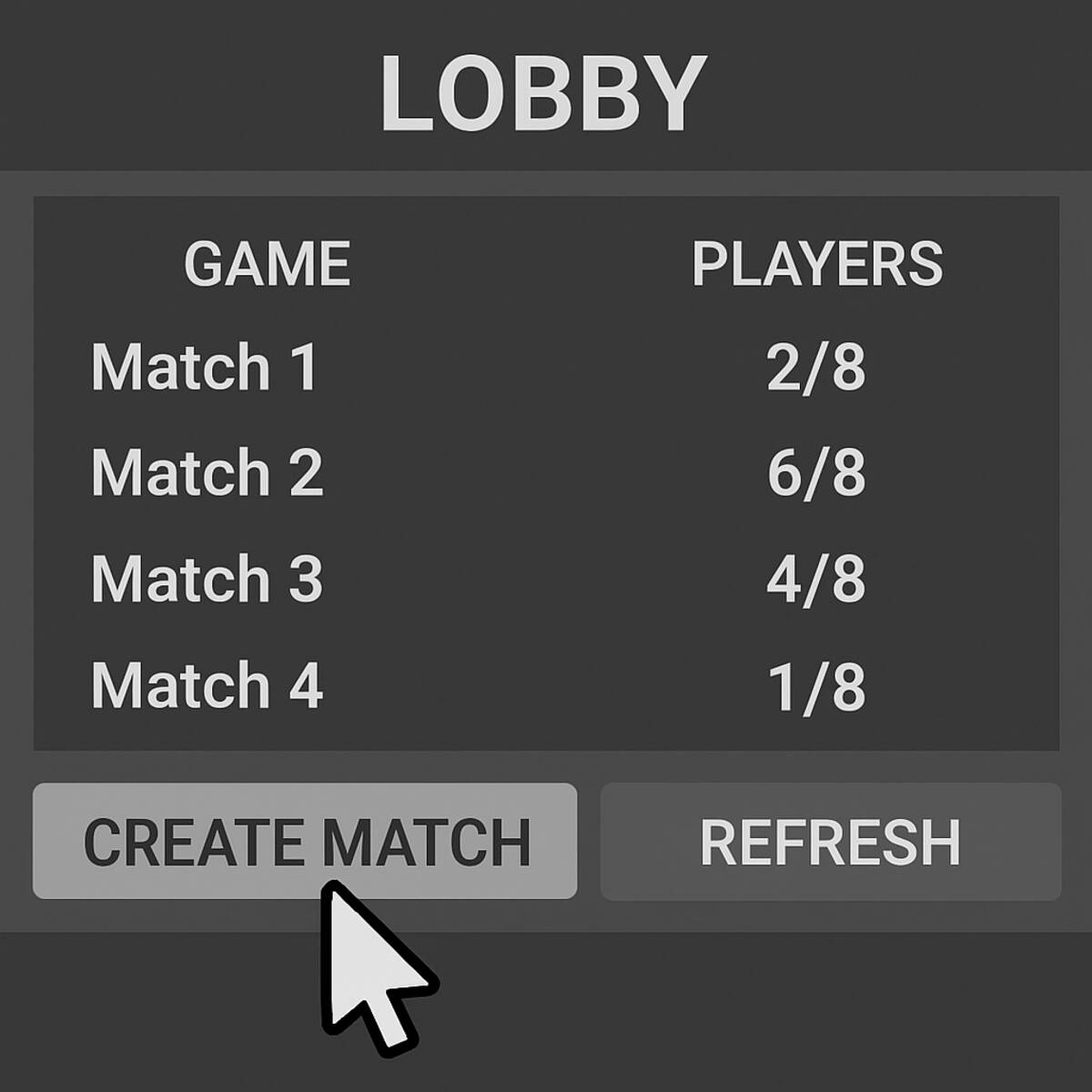
Your first stop is the main lobby, often labeled “Head-to-Head” or “Wagers.” Think of it as a virtual arcade full of open challenges. The key is using the platform’s filters. This is how you find opponents for money matches that fit your comfort level. Select your game, your console, and set the wager filter to $5 to keep the experience fun and focused on learning.
With your filters set, you can either accept an open challenge or click “Create Match” to make your own—a great option for your first time, as it gives you full control. The entire process boils down to four simple steps:
- Your First Wager Checklist:
- Find the “Head-to-Head” or “Wagers” lobby.
- Filter by your game and a low amount ($5).
- Accept a match or create your own.
- Add your opponent, play, and report the score immediately.
After the game, always report the final score on the platform right away. This is crucial for a smooth payout and avoiding any potential disputes. That’s it—you’ve officially completed your first money match! With the mechanics understood, you can now focus on strategies to help you win.
Winning Strategies: How to Play Call of Duty for Money
Transitioning from chaotic public matches to a focused 1v1 duel requires a change in strategy. When you play Call of Duty for money against others, winning isn’t about the most kills, but about outsmarting a single opponent. The fastest way to gain an edge is by rethinking your loadout. In head-to-head games, players love using stun and flash grenades to create easy openings. To counter this, equip the Tactical Mask perk. This simple choice neutralizes your opponent’s go-to trick, preventing cheap deaths and keeping you in control of the gunfight.
Next, you have to adjust your pacing. While aggressive rushing can work in a large public lobby, in a 1v1 it’s a recipe for walking into a trap. Instead, slow down and play for information. A pro-level technique that’s easy to learn is “shouldering” a corner. Before you run into a new area, stand behind cover and use your camera to peek around the edge without fully exposing your character. This gives you a free look to see if your opponent is waiting in ambush, allowing you to plan your attack instead of just reacting.
With a smarter pace, your focus should shift to controlling the map. Every 1v1 map has a “power position”—a spot that offers superior cover and sightlines. On a classic map like Rust, this is the central tower; on Shipment, it’s the corner containers. Your goal shouldn’t be to chase your opponent, but to seize and hold this key location. By forcing them to challenge you on your terms, you tilt the odds heavily in your favor, making your game predictions far more reliable.
These betting tips are all about making small, intelligent adjustments that yield big results. A smarter loadout and a more patient approach are often all it takes to turn a 50/50 gunfight into a confident win.
Score Big: How to Get Paid to Play FIFA Online
If your skills shine brighter on the soccer pitch than the battlefield, the same strategic principles apply. To get paid to play FIFA online, you need to play smarter, not just harder. Forget flashy skill moves and long-shot prayers; winning wager matches comes down to discipline, starting with a defense that doesn’t break. This means embracing the golden rule of FIFA defending: stop controlling your center-backs. Pulling them out of position creates the exact gap a good opponent is looking for. Instead, select your defensive midfielder (CDM) and use them to pressure the ball carrier, letting your AI-controlled backline hold its shape perfectly.
Building on that solid foundation, you must use a formation that is built to win. In the competitive FIFA scene, players talk about “meta” formations. This isn’t a cheat; it simply refers to the formations that are mathematically most effective in the current version of the game. Formations like the 4-3-2-1 or 4-2-3-1 are popular for a reason—they provide a perfect balance of defensive cover and potent attacking channels. A quick search for the current “meta” will instantly upgrade your tactical playbook and improve your game predictions.
With a disciplined defense and a strong formation, the final key is patience. The frantic, end-to-end pace of casual online matches is a losing strategy in peer to peer video game wagering. Instead of forcing a risky pass, learn to control the tempo. Pass the ball around your midfield, wait for your opponent to get impatient, and only attack when a clear opening appears. This possession-based style minimizes mistakes and frustrates your opponent into making the first critical error.
These simple betting tips transform you from a casual player into a calculated opponent. However, winning on the pitch is only half the battle. Even the best players can lose their earnings if they don’t manage their bankroll correctly.
The #1 Financial Risk in P2P Gaming and How to Avoid It
Winning on the virtual pitch is a rush, but the single biggest risk isn’t facing a better opponent—it’s betting too much, too soon. Even pro players have off days. The key to long-term success isn’t just skill; it’s smart money management. This is often called “bankroll management,” but think of it simply as your dedicated gaming budget. It’s a set amount of money you put aside for wagering, and protecting it is more important than any single win.
To safeguard your funds, the most critical of all betting tips is the 5% rule. This simple guideline, a cornerstone of any beginner’s guide to head-to-head gaming, ensures you never get wiped out by a single bad run. It’s a disciplined approach that keeps you in the game.
The Beginner’s Bankroll Rule:
- Deposit an amount you’re 100% willing to lose (e.g., $50).
- Never wager more than 5% of that total in a single match (e.g., $2.50 wager).
- Only redeposit after a set period, like a month, if you choose to.
Following this rule transforms your mindset. A losing streak no longer feels like a catastrophe; it’s just a normal part of the process that your bankroll is built to absorb. You’ll stay afloat, learn from your losses, and be ready to play another day. Managing your cash, however, is only one part of the equation.
Beyond Your Wallet: The Hidden Risks of Playing for Money
The biggest risks of playing video games for money aren’t just financial. Losing a wager feels different than simply losing a match; it adds a layer of emotional pressure that can sabotage your performance. This frustration spiral has a name in the gaming world: “tilt.” When you’re on tilt, you’re playing emotionally, not strategically. You might start chasing losses with bigger, riskier bets or playing aggressively just to “get it back,” which almost always makes things worse. It’s the fastest way to drain both your wallet and your confidence.
To combat tilt, the most important of all betting tips is to set a hard stop before you even begin playing. A simple but powerful strategy is the “Two-Loss Stop” rule: if you lose two paid matches in a row, you sign off from wagering for the day. This isn’t about admitting defeat; it’s a smart, disciplined move that acts as a circuit breaker. It gives you time to cool off and ensures that a small losing streak doesn’t snowball into a catastrophic one, protecting both your bankroll and your mental state.
This discipline also helps you avoid a slower, quieter risk: burnout. When every match is tied to a monetary outcome, the pressure can eventually strip the fun out of the hobby you love. To keep your passion alive and your skills sharp for when you want to “bet my game,” remember to play casual matches and take regular breaks. Managing these mental and financial risks is the key to making this work long-term. With these safeguards in place, you can address the big question: How much can you actually make playing games?
The Real Answer: How Much Can You Actually Make Playing Games?
It’s easy to see headlines about pro gamers winning million-dollar tournaments, but for wagering on your own matches, the reality is much more grounded. Forget the idea of quitting your job tomorrow. Instead, think of this as a powerful way to generate a meaningful side income by doing something you already love. This isn’t about getting rich quick; it’s about getting paid for your skill.
For most skilled players who play video games for real money, earning an extra $50 to $200 a month is a very achievable goal. This depends on your win rate, how often you play, and the size of your wagers, but it’s a realistic target for someone who plays consistently and manages their risk well. Think of it less as a salary and more as a smart way to fund your hobby—using your winnings to pay for new games, upgrade your gear, or just have some extra spending money.
Ultimately, the most valuable takeaway isn’t just the cash. It’s the proof that your time and skill have tangible value. Earning your first $20 from a game you’ve mastered is a huge confidence boost that can ripple into other parts of your life.

Your Next Move: An Action Plan to Bet Your Game This Week
What once felt like a risky online gamble now has a clear playbook. You’ve gone from simply playing your favorite titles to understanding how to safely and strategically enter the world of head-to-head gaming. You have the map; it’s time to take the first step.
Transforming knowledge into skill requires action. This isn’t about diving into the deep end; it’s about making your first smart play. Use this simple plan for setting up a wager match online and completing your first “bet my game” challenge.
Your 7-Day Action Plan:
- Day 1: Assess your best game and research 2 safe platforms.
- Day 3: Sign up, deposit a small, safe amount ($25-$50).
- Day 7: Play your first $5 ‘learning’ match.
Remember, the goal this week isn’t to win big; it’s to start smart. Each small match builds your experience and confidence, turning raw talent into a true competitive edge. The only question left is: What’s the first game you’re ready to bet on?
