


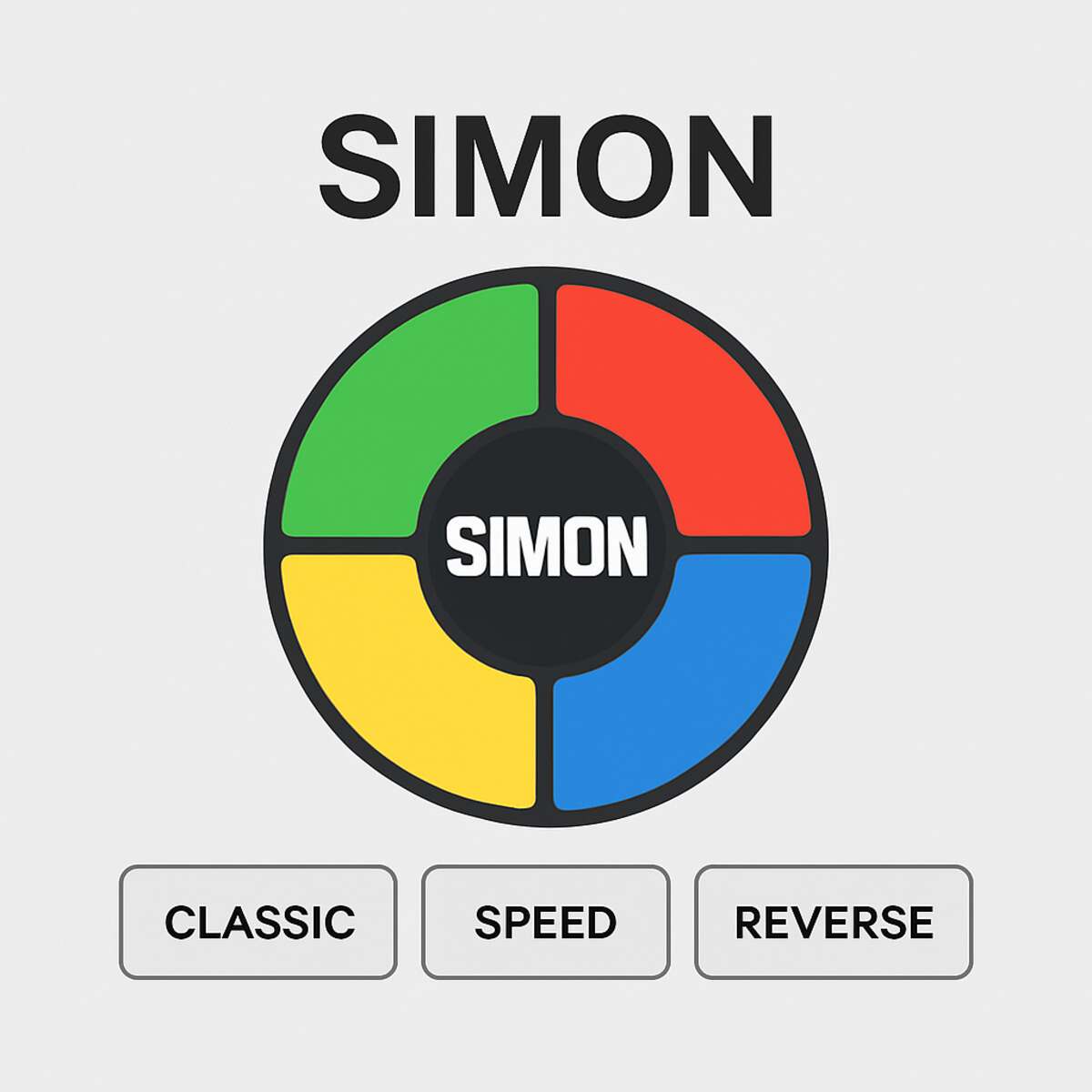
Remember that flashing, beeping circle of colors? For many of us, the classic Simon game was a fixture of childhood, a fun and frantic test of memory. The good news is that you don’t have to dig through the attic to play again. The entire experience has been perfectly recreated, and you are just a few clicks away from challenging yourself. Discover the best info about casino zonder cruks ideal.
That same captivating challenge has found a new home online, accessible right from your computer or phone—no downloads or payment required. Whether you have five minutes between meetings or want a moment of focused fun, you can play Simon Says instantly. It’s the perfect way to see if your memory and reaction time are still as sharp as they used to be.
But this is more than just a trip down memory lane. You might think Simon Says is just a kids’ game, but a five-minute round can actually help you get better at remembering your grocery list. Playing the Simon Says game online is a recognized way to give your brain a quick, effective workout for short-term memory and focus—the same skills you use to recall a phone number or follow driving directions.
Ready to give it a try?
Table of Contents
Where to Play Simon Says Online Right Now (3 Vetted, Safe Options)
You’re ready to test your memory, but a quick search for “play Simon Says game online” can be overwhelming. A great free Simon game is clean, loads quickly, and lets you get right to the fun without any hassle.
To save you the search, here are three excellent and safe places to play, each offering a slightly different experience:
- Memory-Game.online: This is your best bet for a pure, no-frills classic game. The interface is simple and focuses on the traditional four-color pattern, just like the original electronic toy.
- Plays.org/simon-says: If you want more of a challenge, this site is for you. It offers multiple variations like Speed Mode (where the pace quickens) and Reverse Mode (where you repeat the pattern backward).
- Free-Memory-Games.com: Perfect for when you’re on the go. This portal features a Simon Says online game with a clean, mobile-friendly design that works great on a phone or tablet screen.
While these are great starting points, you can easily spot other high-quality sites on your own. Look for a clean layout where the game is the main focus. The best portals have minimal ads that don’t cover the buttons or interrupt your game, ensuring a smooth and enjoyable experience.
Your First Game: A 3-Step Guide to Playing on a Computer or Phone
Once you press ‘Start,’ the game takes the first turn. You’ll see one of the colored pads light up while playing a distinct musical tone. Your only job for this first step is to watch and listen carefully. This is the beginning of the pattern you’ll need to remember, a simple start just like the classic Simon electronic memory game rules you might recall from childhood.
After the game shows you the first color, it’s your turn to act. The colored buttons will sit there, waiting for your input. Using your mouse or your finger, simply click or tap the color that just lit up. The key is to repeat the pattern exactly. If it flashed blue, you press blue. This simple call-and-response is the foundation of how to play Simon Says on a computer or phone.
If you get it right, the game will replay the original sequence and then add one brand-new color to the end. Now, you have to repeat this new, longer pattern from memory. This is the core challenge: watch, repeat, and add one. Your goal is to see how long of a sequence you can correctly mimic as it grows with every successful round.
Eventually, you’re bound to make a mistake—it’s part of the fun! When you press the wrong color, you’ll likely hear a “buzz” sound, and the game will show you your final score. This number represents the longest pattern you managed to remember. Don’t worry, you can almost always restart immediately for another try.
Is Playing Simon Actually Good for Your Brain? The Short-Term Memory Boost
That simple game of follow-the-leader with colors is more than just a fun distraction; it’s a focused workout for a crucial cognitive skill. Playing Simon directly targets what psychologists call your “working memory.” Working memory is like your brain’s temporary sticky note—it’s where you hold onto information you need to use right now, like a phone number someone just told you or the items left on your grocery list.
With every round, the game forces you to use and expand this mental sticky note. You see the pattern, hold it in your mind for a few seconds, and then act on it. When the sequence grows from three colors to four, you’re not just remembering one more item; you’re actively updating and holding onto a more complex piece of information. This process is one of the clearest cognitive benefits of sequence games, as it provides a direct, measurable challenge to your immediate recall abilities.
This mental muscle isn’t just for getting a high score in an online memory game like Simon. Strengthening your working memory has real-world benefits. It’s the same skill that helps you follow a multi-step recipe, recall driving directions while on the road, or remember the key points from a meeting. These kinds of improve short-term memory activities help keep your mind sharp and responsive.
How to Beat the Simon Game: The ‘Say It Out Loud’ Strategy
One of the simplest and most effective tricks for how to beat the Simon game is to say the name of each color out loud as it lights up. If you’ve ever repeated a phone number to yourself to remember it, you already know how powerful this is. As the sequence plays—”Red… Red, Blue… Red, Blue, Green”—verbalizing the pattern creates a stronger mental footprint than just watching silently, instantly giving you an edge.
This simple habit works because it gives your brain two paths to the memory instead of just one. When you only watch the screen, you’re relying on visual memory. But when you say the colors, you add auditory memory to the mix—you see the color and you hear yourself say it. If your visual memory momentarily falters, this second pathway acts as a backup, making it much easier to recall the correct order. This transforms the game into a potent form of color and sound memory training.
By turning the game into one of these active improve short-term memory activities, you’ll find that longer sequences feel less intimidating. You’re no longer just passively observing; you’re actively engaging multiple senses to lock the pattern in. Once you master this technique, you can combine it with another pro-level strategy for handling those truly massive sequences: “chunking.”
Getting a Higher Score: How to ‘Chunk’ Long Sequences Like a Pro
Saying the colors aloud is a game-changer, but eventually, you hit a wall. When the pattern stretches past ten or twelve colors, even verbalizing can turn into a jumbled mess. This is where a classic memory trick called “chunking” comes in. It’s the secret to how to beat the Simon game when the sequences get truly long, and you likely already use this technique every day without realizing it.
Think about how you remember a phone number. You don’t memorize ten single digits in a row; your brain naturally groups them into chunks, like (555)-123-4567. It’s much easier to hold onto three small groups of information than ten separate items. This mental shortcut is incredibly powerful, and it’s the same strategy you can bring to an online memory game like Simon to push past your old high score.
As the sequence grows, stop trying to remember one long string of colors. Instead, mentally break it into small, rhythmic sets of three or four. A daunting pattern like “Red-Blue-Blue-Green-Yellow-Yellow-Red” becomes the much simpler “Red-Blue-Blue / Green-Yellow-Yellow / Red.” By turning a stressful list into a few manageable groups, you’re practicing one of the most effective ways to improve short-term memory activities.
Beyond Classic: Which Simon Game Variation Is Right for You?
Once you start chunking sequences and see your high score climb, the classic game might begin to feel routine. When you’re ready for a fresh challenge, you don’t have to find a new game—you just have to find a new mode.
Fortunately, most online versions offer exciting simon says game variations that twist the rules just enough to keep you on your toes. These modes provide simon says with different difficulty levels, targeting different mental skills beyond pure recall. Instead of just asking, “Can you remember this?” they ask, “Can you remember this… backward?” or “…at twice the speed?”
Choosing the right one depends on the kind of workout you’re looking for. Here are the three most common options:
- Speed Mode: The game gets faster as the sequence gets longer. Perfect for a reaction-time challenge.
- Reverse Mode: You must repeat the sequence backwards. A true brain-twister for your working memory.
- Hard Mode: The number of colors increases from 4 to 6 or even 9, making patterns much harder to track.
If you’re looking for a jolt of adrenaline, Speed Mode is your best bet. For a puzzle that truly messes with your mind, give Reverse Mode a try. These alternatives to the classic simon game add modern layers to a design that has captivated players for decades.
The Original ‘Simon’: A Look Back at the 1978 Milton Bradley Classic
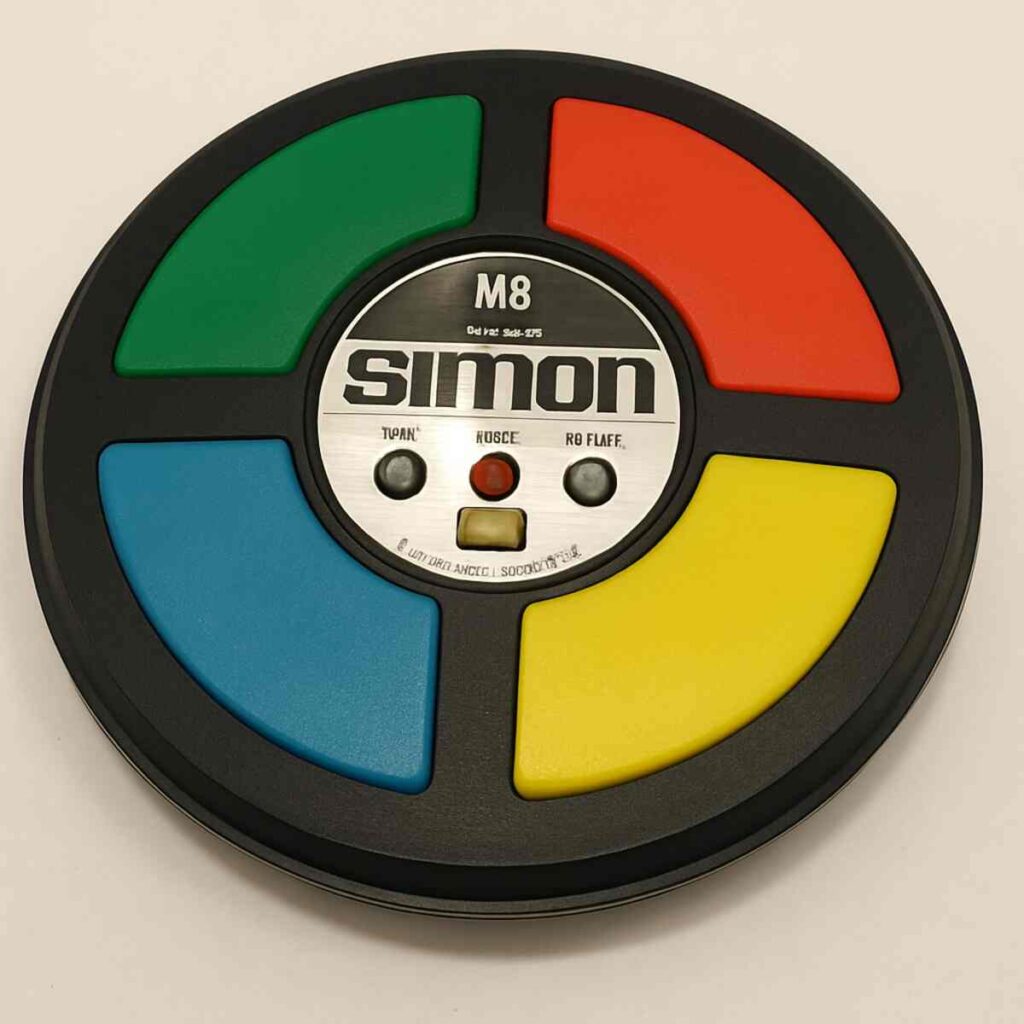
That iconic, beeping circle first landed in stores and living rooms in 1978. The Milton Bradley 1978 Simon game was an instant sensation, becoming the must-have electronic toy of the holiday season. Its design came from the mind of Ralph H. Baer, a prolific inventor often called “the father of video games,” who saw the potential for a handheld memory challenge that anyone could play.
Interestingly, the idea wasn’t entirely new. Baer and his team adapted the concept from a little-known Atari arcade game called “Touch Me,” which had a similar pattern-matching premise but failed to catch on with the public. By refining the design into the beloved four-color circle and adding its signature musical tones, Baer and Milton Bradley turned a forgotten arcade concept into the classic simon toy that would define a generation.
The magic of the simon electronic memory game was its elegant simplicity. It didn’t need complex rules or a long story—the challenge was baked right into its design, hooking players who were determined to beat their own high scores. This relentless pursuit of a personal best begs a question that players have asked for decades: Just what is the highest possible score you can get?
What Is the Highest Possible Score in the Simon Game?
For players of the classic 1978 toy, there’s a definitive answer to what is the highest score in simon game. The original hardware was programmed to stop after a sequence of 31. If you successfully repeated that 31-step pattern, the game would play a short victory tune and reset. This was a limit set by the game’s internal memory chip—it had a finite amount of space to store the pattern.
Online versions, however, are a completely different story. Since they run on computer code instead of a simple electronic chip, there is no built-in limit. The game’s program can generate a new step in the sequence forever, meaning the simon game levels are technically infinite. As long as your browser is open and you keep getting the pattern right, the game will happily keep making it longer and longer.
So, if the game never ends, what does it mean for how to beat the simon game? The goal shifts from reaching a final level to achieving a new personal best. The real opponent isn’t the game; it’s your own previous high score. This focus on self-improvement makes every round rewarding, whether you’re aiming for a sequence of 15 or 50.
How to Play Simon Says Multiplayer and Challenge Your Friends
While topping your own high score is satisfying, the real thrill comes from testing your memory against others. When you play Simon Says multiplayer, the game transforms from a solo memory test into a tense, competitive showdown. The most common format is ‘Last Person Standing’ or ‘Elimination’. In this mode, you and other players all see the same sequence of colors. Everyone attempts to repeat it, but the first person to make a mistake is knocked out. The rounds continue with an ever-growing pattern until only one player remains to claim victory.
Finding a game to play with friends is often as simple as looking for a “Create Room” or “Invite” button on a gaming website. These platforms typically generate a unique code or link that you can share with family and friends, allowing you to create a private lobby. This turns the classic game into a fantastic interactive memory challenge for adults, perfect for a virtual game night or a quick break with colleagues.
The presence of other players completely changes the dynamic. Suddenly, it’s not just about being correct—it’s about being fast. In many of these Simon Says game variations, speed becomes just as important as accuracy. If multiple players complete the sequence correctly, the one who did it slowest might still be eliminated. This adds a layer of pressure that makes every round exciting.
The Best Free Simon Game App: 3 Things to Check Before You Download
While playing with friends online is a blast, sometimes you want the best free Simon game app right on your phone for a quick solo challenge. A search in your app store will reveal dozens of options, but they aren’t all created equal. Some are fantastic, while others are filled with frustrating interruptions that can spoil the fun.
Before you hit “download,” take a moment to glance at the app’s page for a few key details. This simple check can save you a headache later:
- Controls: Look at the screenshots. Are the color buttons large and spaced out? Fumbling with tiny, cramped buttons is a common cause of mistakes.
- Ads: Read a few recent reviews. A few ads are normal for free games, but players will quickly complain if gameplay is constantly interrupted after every turn.
- Variety: Does the description mention different modes? A good app will often include a speed-up challenge or difficulty levels to keep things interesting.
Deciding between an app and a browser-based Simon Says game online comes down to convenience versus commitment. An app is always there on your home screen, but it takes up space and might ask for unnecessary permissions (a simple game shouldn’t need access to your contacts or files). A browser game requires no installation and is perfect for instant play, though you’ll need an internet connection.
Love Simon? Try These 3 Other Online Games for Memory Training
Mastering Simon’s patterns is a fantastic workout for your sequential memory—the skill for remembering things in a specific order. But just like in a gym, working out different mental “muscles” gives you a more complete benefit. If you’re ready for a new challenge, several other types of games build on the fun of Simon’s core color and sound memory training.
One popular alternative challenges your spatial recall. Instead of repeating a sequence, you’ll see a grid of tiles that flash briefly, and you must remember which ones lit up. Think of it like trying to picture where you parked your car in a crowded lot. It’s less about the order of events and all about remembering their location, giving your visual memory a different kind of exercise.
For an experience that feels like an online memory game like Simon, but with a twist, try a purely auditory challenge. These games play a sequence of musical notes without any visual cues, forcing you to rely entirely on your hearing. It’s a great way to practice the same skill you use when someone tells you a phone number, and you have to dial it from memory a moment later.
Lastly, number memory games offer a pure test of sequential recall, challenging you to repeat an ever-growing string of digits. Exploring these alternatives to the classic Simon game provides a more varied mental workout. The best part? You can start strengthening your memory with just a few minutes a day.
Your 5-Minute Plan to Boost Your Memory Today
When you play Simon Says online, you’re not just passing time—you’re engaging in a fun, free, and effective way to give your brain a quick workout. That flashing circle of colors is a powerful tool, and you are ready to use it.
Ready to turn that knowledge into a new high score? Here is your simple plan to start in the next minute:
- Pick one of the ad-free sites from our list.
- Play three rounds in ‘Classic Mode’ to warm up.
- On your next game, try the ‘Say It Out Loud’ strategy and see if you can beat your previous score.
Think of this not just as a game, but as one of the most accessible activities to improve short-term memory. Every round you play is a small, satisfying step toward building a sharper mind. This interactive memory challenge for adults is proof that your next five-minute break doesn’t have to be mindless—it can be the moment you use to feel more focused and accomplished.
