


Ever wonder what really happens when you press ‘Play’ on a game like Fortnite or World of Warcraft? You’re one of a million people logging in, yet you instantly appear in a world that remembers your character, your gear, and your last quest. It feels like magic, but it’s the result of a massive, hidden operation that online game companies run 24/7. Let’s pull back the curtain on the machinery that makes these digital worlds possible. The Interesting Info about alternatif indoxslot.
That same operation is also why things sometimes go wrong. We’ve all felt the frustration of a character freezing from lag, only to reappear a moment later, already eliminated. We’ve also seen the dreaded “servers are down for maintenance” message right before a big event. These aren’t random glitches; they are often symptoms of the incredible complexity required to connect millions of players in a single, shared digital space.
This online game guide is your backstage pass to that complexity. It explores how online games work, starting with the technology—the powerful ‘servers’ that act as the game’s brain and the ‘databases’ that serve as its perfect memory. From there, we’ll meet the human element: the ‘Live Ops’ teams, who act like digital park rangers keeping the world running, and discover the business models that keep the lights on.
By the end, you won’t just be a player; you’ll be an informed observer. You’ll understand why your game needs an update, what’s happening during a login queue, and gain a new appreciation for the immense effort behind your favorite hobby. The next time you log in, you’ll see the invisible architecture holding it all together.
Table of Contents
Your Screen Is Just a Window: Understanding the ‘Client’
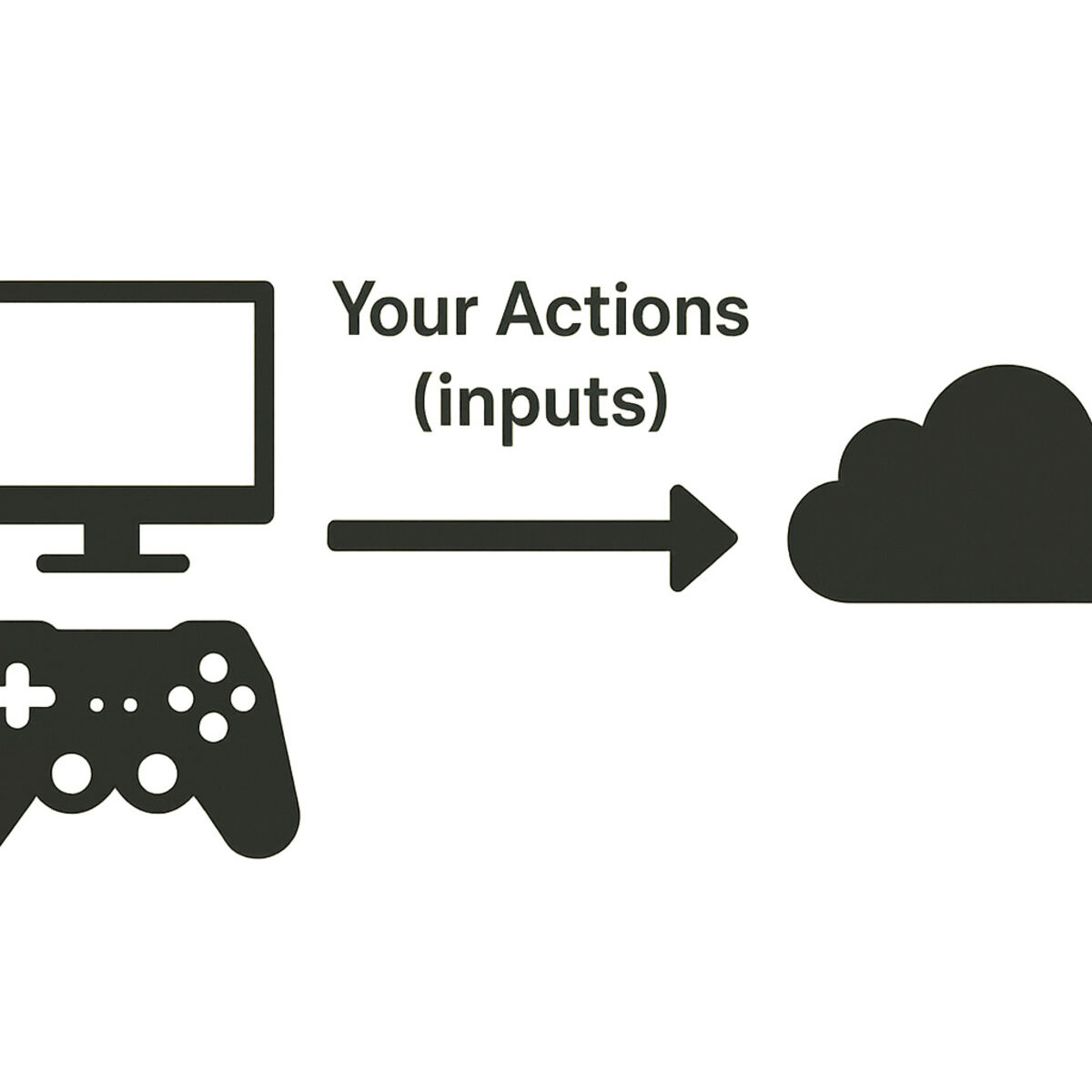
When you sit down to play an online game, everything you see and touch—your PC, your console, your phone—is part of what the industry calls the game client. Think of the client as a high-tech, interactive window. Its main job is to display the game world in all its glory and, just as importantly, to listen to your commands. It’s the part of the operation that renders the beautiful graphics and plays the booming sound effects you experience.
Every button you press and every click of the mouse is an instruction. When you decide to run forward or cast a spell, your client doesn’t have the final say on what happens. Instead, it instantly packages that action—“I want to run forward!”—into a tiny message and sends it across the internet. Its role isn’t to run the game, but to report your intentions to the real boss.
This separation is why you and a friend can play together, but the game might look sharper on your screen if you have a more powerful PC with higher graphics settings. You each have your own client, but you’re both connected to the same shared world. The client is responsible for the “show and tell” part of the experience. But who is it telling? For the game to work, your message needs a recipient: the powerful digital referee known as the server.
The Digital Referee: What Is a Game Server?
That message your client sends across the internet has a destination: a powerful computer called a server. For any online game, the server acts as the ultimate referee and the single source of truth. If your client is an interactive window, the server is the one who decides what’s actually happening in the world outside that window. It’s the central brain of the entire operation, listening to requests from thousands of players simultaneously and keeping the game world consistent for everyone.
This referee role is crucial for fairness. The server’s most important job is to validate every action. When your client says, “I’m opening this treasure chest!” the server checks its rulebook. Do you have the key? Are you close enough to the chest? This prevents cheating, as your client can’t just decide on its own that you found a legendary sword. By having one central authority, the game ensures no player has an unfair advantage, making it the impartial enforcer of the rules.
Because this communication has to travel—sometimes hundreds or thousands of miles over physical internet cables—it isn’t instantaneous. The delay between your client sending a command and the server sending back a confirmation is called latency, which you probably know by its frustrating nickname: lag. When your character stutters or freezes, it’s often because your client is waiting for the server’s permission to proceed. This travel time for data is a core part of the online experience.
Ultimately, this constant conversation between your client and the server is the heartbeat of any live online game operation. The server ensures the match you’re in is fair and that everyone sees the same reality. But the server is focused on what’s happening right now. So how does the game remember the gear you had equipped yesterday or the quests you completed last week? For that, the server needs to consult the game’s permanent library: the database.
How Games Remember You: The Magic of the Database
Ever logged back into a game like World of Warcraft after a week away and found your character exactly as you left them—same gear, same gold, same location? This isn’t the server’s job. The server is focused on the fast-paced action of the present moment. For long-term memory, it relies on a separate system called a database. Think of the database as the game’s gigantic, perfectly organized digital filing cabinet. Every character, every item, and every completed quest has its own meticulously labeled file stored safely inside. This is how multiplayer games save progress, ensuring nothing you’ve earned is ever lost.
This separation of duties is critical. The server acts like a busy event coordinator, managing the live action and making sure thousands of players are interacting correctly right now. The database, in contrast, is the quiet archivist, unconcerned with the live action. When you finish a mission, the server (the coordinator) sends a quick note to the database (the archivist) saying, “Update Player123’s file: they just completed the ‘Dragon’s Bane’ quest.” The game database then updates your permanent record without slowing down the live game.
So, the moment you click ‘Log Out,’ the server takes one last snapshot of your character’s state and sends it to the database for safekeeping. When you return, the server simply pulls your latest file, and you’re ready to go. This player data storage system is why your hard-earned loot is safe even if the game undergoes maintenance or a server unexpectedly restarts. But keeping these servers and databases running 24/7 for millions of players isn’t just an automated task. It requires a dedicated human crew working behind the scenes.
The 24/7 Stage Crew: Meet the Live Ops Team
That human crew keeping the game world spinning is known as the Live Operations team, or “Live Ops.” Think of them as the stage crew for a massive, never-ending play. While developers build new content for the future, the Live Ops team works 24/7 in the wings, making sure the current show runs without a hitch for its millions of players. Their entire focus is on the health and stability of the live game, right now.
Their most critical role is acting as the game’s first responders. When a disastrous bug appears—like an item that unexpectedly crashes the server or a new exploit that lets players cheat—the Live Ops team is paged. It doesn’t matter if it’s 3 AM on a holiday; their job is to immediately triage the problem, assess the damage, and deploy a fix to protect the game’s stability and fairness for everyone.
For these urgent issues, the team can’t wait for a large, scheduled game update. Instead, they often deploy a hotfix. This is a small, surgical code change that can be applied directly to the live server, often without requiring you to restart or download anything. It’s the digital equivalent of a road crew patching a single, dangerous pothole overnight instead of repaving the entire highway, allowing traffic to flow smoothly by morning.
The next time you see a notice for “emergency maintenance” or read that a game-breaking bug was fixed just hours after it was discovered, you’re seeing the Live Ops team in action. They are the invisible guardians of the game’s technical health. But managing the game’s code is only half the battle; someone also has to manage the community of players living within it.
The Bridge Between Worlds: The Power of Community Management
If you’ve ever posted on a game’s official forum, joined its Discord server, or commented on its social media, you’ve likely encountered a Community Manager. While it’s easy to see them as simple moderators who enforce rules, their role is far more critical to successfully managing an online game community. They are the official bridge between the players and the developers—serving as the voice of the development team to the community and, just as importantly, the voice of the community back to the team. They are the diplomats of the digital world.
A huge part of their job involves managing player feedback and game updates. Community Managers spend their days absorbing a tidal wave of opinions from platforms like Reddit, Twitter, and Twitch. They are trained to look past the noise and identify underlying trends. Is a particular new feature causing widespread frustration? Is a certain character suddenly feeling underpowered after the latest patch? They gather this mountain of feedback, distil it into concise reports on player sentiment, and deliver it directly to the developers who can prioritize a fix.
This constant flow of information has a real impact. That frustrating bug you and hundreds of others reported might get fixed faster because a Community Manager flagged it as a top player concern. This makes the community active partners in a game’s evolution, not just customers. This dedicated technical and community support is vital, but it also creates high costs. That raises a critical question: how do these vast digital worlds keep the lights on?
Keeping the Park Open: How Online Games Actually Make Money
Running a massive online world with servers, developers, and community teams costs a fortune. So, how do these games pay the bills? The strategy for generating income is called monetization, and it’s the engine that keeps the digital lights on. For most online games today, this strategy follows one of two main paths: a regular entry fee or optional in-game purchases.
This fundamental choice creates the free-to-play vs. subscription model debate. Subscription games like World of Warcraft charge a recurring fee for access, while Free-to-Play (F2P) games like Fortnite and Apex Legends are free to download and play. Each approach has a different philosophy on how players should pay for their experience.
| Subscription Model | Free-to-Play (F2P) Model | | :— | :— | | Regular fee required | No cost to start playing | | All major content included | Optional purchases offered | | Predictable revenue for devs | Revenue varies with spending |
This shift towards ongoing payments has popularized the game as a service (GaaS) business model. Instead of selling you a finished product like a movie ticket, developers are providing a constantly evolving service, much like a streaming platform that adds new shows every month. This approach allows developers, from huge studios to small indie teams, to support their games for years. The goal isn’t just to sell you a game; it’s to keep you engaged in a world that is always growing and changing.
For F2P games, that ongoing support is funded almost entirely by microtransactions—small, optional purchases for things like character outfits, special animations, or “Battle Passes” that unlock rewards as you play. While it might seem strange to pay for a cosmetic item in a “free” game, that purchase directly funds the server costs, the support staff’s salaries, and the development of future content. This revenue is what allows the team to do more than just maintenance—it empowers them to build entirely new attractions for the park.
Building New Attractions: The Truth About Patches and Updates
That promise of an ever-growing world, funded by ongoing player support, is delivered through two kinds of updates: patches and expansions. Think of a patch as routine maintenance in a theme park—fixing a wobbly handrail, repainting a sign, or squashing a literal bug. It’s a small, targeted fix to improve the existing experience. An expansion, on the other hand, is like building a whole new land with new rides and characters. It’s a massive addition of new content designed to give players exciting things to do.
When developers discover a flaw in the game’s code—maybe a magic spell that doesn’t work or an item that disappears from your inventory—they release a patch to fix it. This usually requires you to download a small file that overwrites the faulty code on your system. The goal is to solve a specific problem quickly, ensuring the game runs smoothly and fairly for everyone. These fixes are often a direct result of managing player feedback and bug reports from the community.
For a major expansion, however, a simple download isn’t enough. This necessity leads to the dreaded maintenance window, a period when the game servers are taken offline. While your download updates your machine (the client), the developers must simultaneously update the central server and database. They are essentially closing the park to install the new roller coaster. The server has to learn the rules for the new content, and the database needs to be prepared to save your progress in these new zones. Without this coordinated downtime, your game would have a map to a new area that doesn’t actually exist on the server.
This coordinated effort between what you download and what the developers update on their end is the core of game maintenance. It’s a complex, carefully planned operation to ensure that when the doors to the park reopen, every new attraction works for millions of players at once. This constant cycle of fixing and building is an enormous undertaking, and it carries a high cost far beyond the game’s initial price tag.
The Hidden Price Tag: What It Really Costs to Run a Game
That high cost of keeping a game world alive breaks down into three major, ongoing expenses. The most obvious is server hosting—the digital rent paid for the thousands of powerful computers that run the game 24/7. Second is the staff; the Live Ops and Community teams you’ve met are full-time professionals on payroll. Finally, there’s the cost of attracting new players, a marketing effort called User Acquisition. Just like a theme park runs ads to bring in new visitors, a game studio must constantly find new players to keep the world vibrant and growing.
But an online game’s budget has a strange quirk: success makes it more expensive. If a game suddenly goes from 10,000 players to one million after a streamer makes it famous, its server costs can multiply overnight. More players mean more data to process, more worlds to manage, and more customer support tickets to answer. Unlike selling a million copies of a single-player game, where the cost is mostly fixed, a popular online service sees its bills scale directly with its popularity. That viral success can be both a dream come true and a sudden financial crisis.
This financial reality is why so many games rely on in-game stores, battle passes, or subscriptions. A one-time purchase price can’t cover the endless costs of servers, staff, and future development. This ongoing revenue is the engine that keeps the lights on, pays for the next big expansion, and funds the constant battle to improve the experience. Yet, a large part of that budget is also spent on a less visible but crucial task: protecting the players and the integrity of the game itself from those who try to break the rules.
The Digital Arms Race: How Developers Fight Cheaters
For every player who plays by the rules, someone is trying to gain an unfair advantage. Most cheats, like the infamous “aimbot” (which automatically aims for you) or “wallhack” (which lets you see through walls), work by exploiting your own computer. Because your game client needs to know where other players are to show them to you, a cheat program can secretly read that data and display it in forbidden ways. It’s like having a teammate whisper enemy locations in your ear, except the teammate is an illegal piece of software.
To counter this, developers deploy powerful anti-cheat software. Think of it as a mandatory security guard that runs alongside the game on your PC. This watchdog program constantly scans for unauthorized software trying to peek at the game’s memory or manipulate its code. When it detects a known cheat, it can instantly boot the offender from the game and flag their account for a permanent ban. This constant monitoring is a crucial part of preventing cheating in multiplayer games, ensuring the playing field stays as level as possible.
This creates a constant cat-and-mouse game. Cheat-makers find a new way to hide from the security guard, so developers must study the new cheat and teach their anti-cheat software how to spot it. They also use game analytics to find cheaters who slip through, looking for players with impossibly perfect statistics. This is why cheating can never be “solved”—it can only be managed. For every defense the game’s operators build, someone else is already working on a way to tear it down, making this digital arms race a permanent, costly part of running any online game.
The Game Behind the Game
What once looked like a single screen can now be seen as an entire invisible machine. Your computer is a window into a world held together by a constant conversation between powerful servers acting as referees and meticulous databases serving as a perfect memory. Behind every patch and community event are dedicated teams—the digital stage crew—working to keep the entire operation running smoothly.
The next time you see a “Server Maintenance” notification, you’ll see the crew tuning the engine. When a new season launches, you’ll recognize it as a core player retention strategy: a new attraction in an ever-expanding park. This perspective reveals the ‘why’ behind the lag, the updates, and the in-game events you experience every day.
An online game is not a product you buy from a shelf; it’s a living theme park. It’s a place constantly being maintained, expanded, and managed by a huge team, all working to support its thriving digital community. The magic feels real because, in a way, it is—and it’s built by this immense, hidden operation.
