


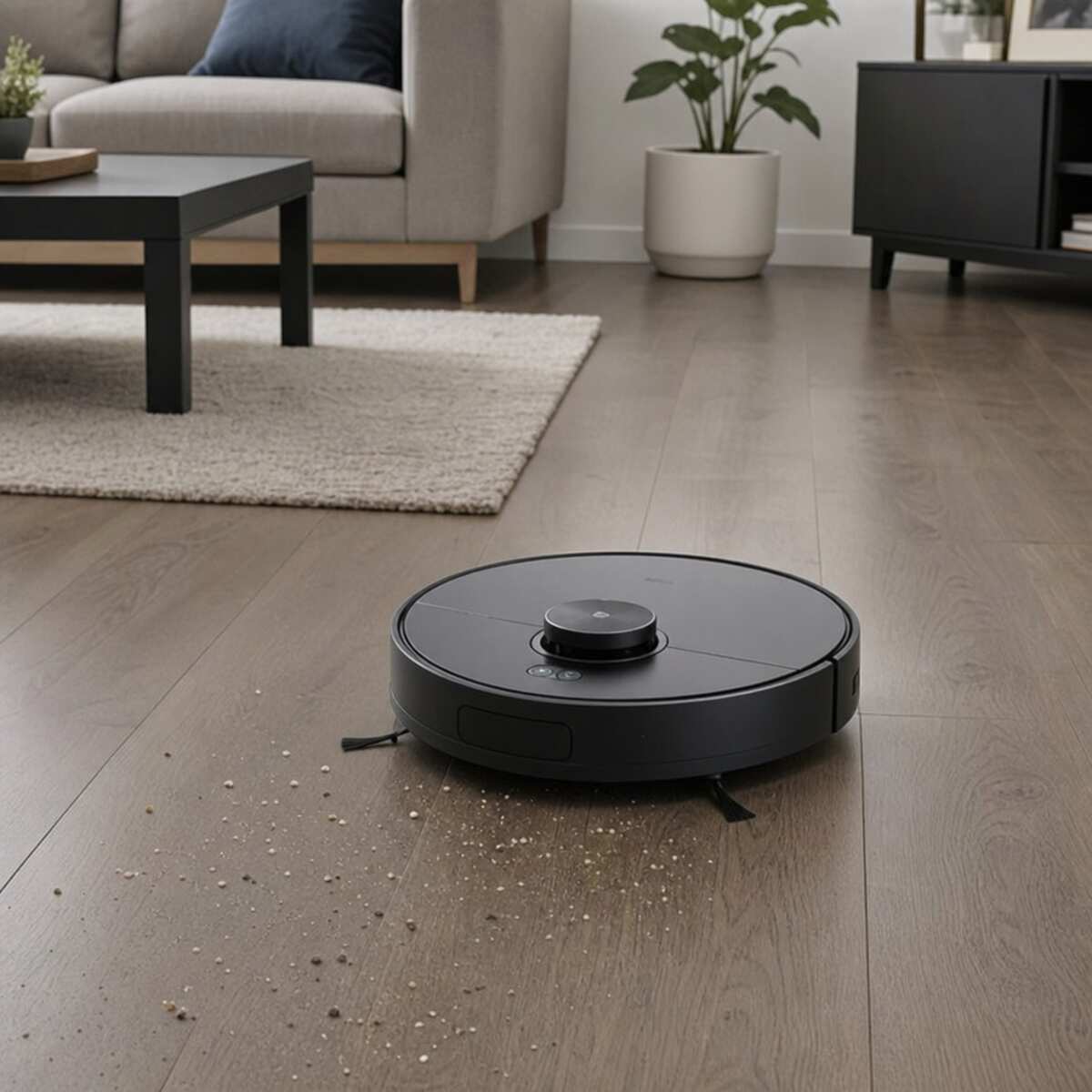
Welcome to the golden age of smart home technology, where the dreaded weekend chore of pushing a heavy machine across your living room is rapidly becoming a relic of the past. If you are tired of spending your precious free time battling dust bunnies, pet dander, and tracked-in dirt, you have likely considered investing in a smart floor-cleaning assistant. But with the market flooded with hundreds of models, ranging from budget-friendly pucks to ultra-premium cleaning stations, comparing robotic vacuums can feel like navigating a maze. Obtain the Best information about Robot Süpürge.
In this comprehensive guide, we are going deep into the world of automated cleaning. We will explore cutting-edge technologies, break down essential features, and help you determine exactly which machine deserves a spot in your home. Whether you are upgrading from an older robot vacuum or transitioning away from a traditional manual stick cleaner, this article is designed to be your ultimate resource.
Table of Contents
The Evolution of Floor Cleaning: From Manual to Autonomous
To truly appreciate the modern Robotic Vacuum Cleaner, we have to look at how far we have come. Decades ago, the upright vacuum revolutionized home hygiene. Years later, the cordless vacuum offered incredible freedom, allowing us to dart up and down stairs without being tethered to a wall outlet. While a high-quality cordless vacuum remains a staple for spot cleaning and reaching high corners, it still requires your active participation.
Enter the Robotic Vacuum Cleaner.
The promise of the robot vacuum is simple: delegating the repetitive, mundane task of floor maintenance to a machine. However, the early generations of these devices were little more than blind bumper cars. They would aimlessly ping-pong across a room, frequently getting stuck under sofas or tumbling down stairs. Today’s machines are sophisticated, intelligent, and highly capable robots equipped with military-grade mapping sensors and artificial intelligence.
But as features have multiplied, so has the complexity of choosing the right one. How do you separate the marketing hype from real-world performance? Let’s break down the core components that separate the winners from the losers.
The Brains of the Operation: Navigation and Mapping
If you have ever wondered, how do autonomous floor cleaners navigate?, the answer lies in an impressive array of sensors, lasers, and cameras. A robot’s ability to clean efficiently relies entirely on its ability to see and understand your home’s layout. A machine with massive suction power is useless if it spends half its battery life lost in a hallway or repeatedly bumping into your dining table.
LiDAR vs vSLAM Navigation Technology
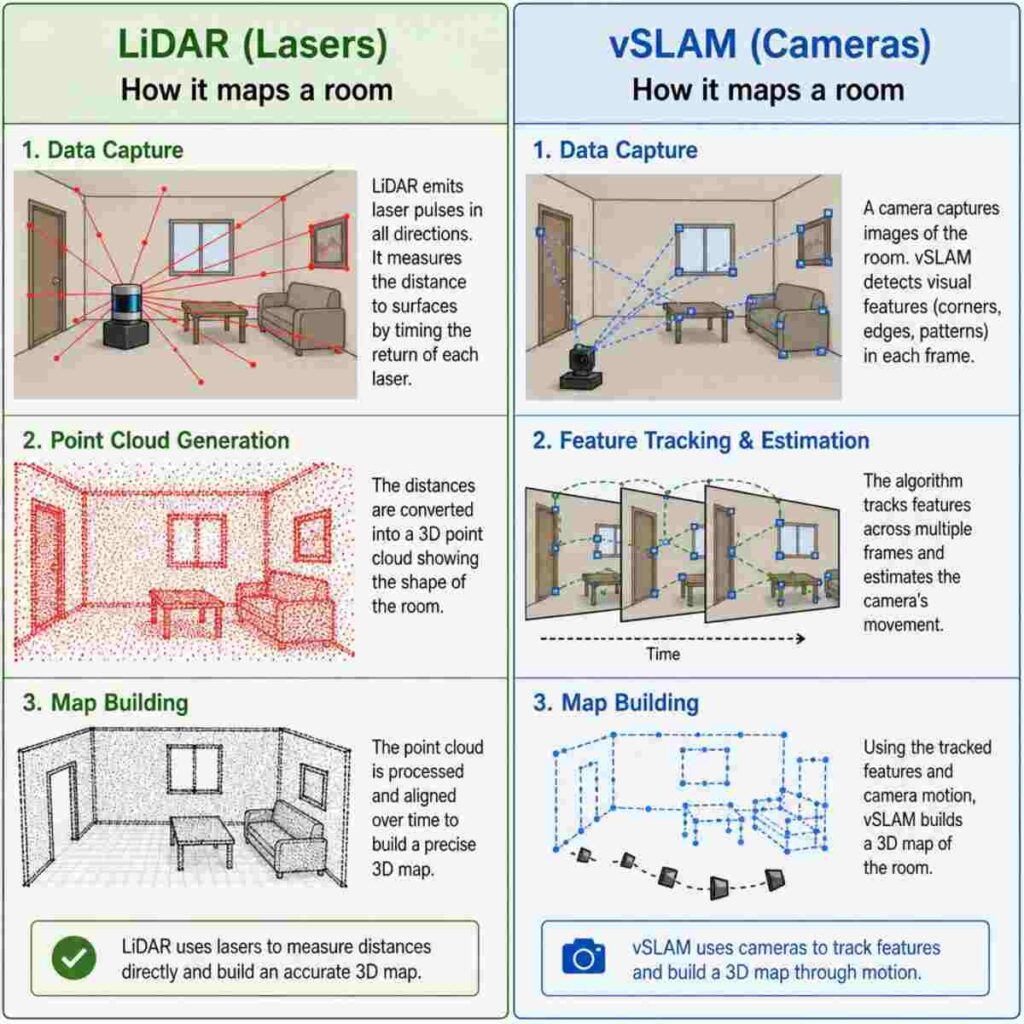
When comparing high-end models, you will inevitably encounter a debate: LiDAR vs vSLAM navigation technology. Understanding the difference between these two systems is crucial for choosing the right bot for your specific home environment.
LiDAR (Light Detection and Ranging): LiDAR-equipped robots feature a spinning laser turret on top of the unit. This laser constantly shoots out invisible beams of light, measuring the time it takes for them to bounce back from walls and furniture.
- The Pros: LiDAR is incredibly fast and fiercely accurate. A LiDAR robot can map an entire floorplan in minutes without taking a single cleaning pass. Furthermore, because it relies on lasers rather than ambient light, it operates flawlessly in pitch-black rooms.
- The Cons: The turret adds height to the robot, which might prevent it from squeezing under very low-profile furniture.
vSLAM (Visual Simultaneous Localization and Mapping): Instead of lasers, vSLAM relies on an optical camera (or multiple cameras) to capture thousands of data points a second, identifying visual landmarks in your home like the corner of a ceiling or a doorway.
- The Pros: vSLAM robots can be built with a slimmer profile, allowing them to glide effortlessly under low couches and cabinets. The cameras can also be utilized for remote home monitoring via the companion app.
- The Cons: Because vSLAM relies on optics, these robots need light to “see.” If you prefer to schedule your robot to clean at 2:00 AM while the house is dark, a purely vSLAM-based model will likely get lost.
Artificial Intelligence Obstacle Avoidance Systems
Navigation helps the robot understand the permanent structure of your home, but what about the temporary obstacles? A pair of socks left in the hallway, a rogue smartphone charging cable, or worst of all—a pet accident.
This is where artificial intelligence obstacle avoidance systems come into play. Premium robot vacuums combine their primary navigation tech (LiDAR or vSLAM) with front-facing AI cameras and cross-line lasers. These systems are trained on millions of images of common household clutter. When the robot approaches an object, the AI recognizes it—saying, “That is a power cord, I should steer clear”—and alters its path in real-time.
If you have a busy household with children or pets, AI obstacle avoidance is not just a luxury; it is a necessity that prevents the machine from dragging messes across the floor or choking on shoelaces.
Performance Metrics: Suction, Brushes, and Air Quality
A smart robot is great, but it still needs to be an effective cleaner. When evaluating cleaning performance, you need to look past the manufacturer’s raw numbers and understand how the components work together.
Decoding Suction Power
Manufacturers boast about Pascals (Pa), the metric used to measure suction pressure. Early robot vacuums hovered around 1,000 to 1,500 Pa. Today’s mid-range models easily hit 3,000 to 4,000 Pa, while ultra-premium flagship models boast a staggering 8,000 to 10,000 Pa.
But raw power isn’t everything. High suction is primarily beneficial for one specific scenario: pulling heavy debris out of deep crevices and carpets.
Suction Power Performance on High-Pile Carpets: Hardwood floors require very little suction; an efficient brush roll sweeping dirt into the vacuum’s path is usually sufficient. However, if your home features thick rugs or wall-to-wall carpeting, suction power performance on high-pile carpets becomes the ultimate test. High-pile carpets trap dust, sand, and pet dander deep within their fibers. A top-tier robot vacuum will utilize an auto-boost feature, automatically detecting when it transitions from hard floors to carpet and cranking its motor to maximum suction to pull out embedded dirt.
The Best Automated Vacuum for Pet Hair
For pet owners, a robot vacuum is life-changing, but pets present a unique challenge. Fur clumps easily, sticks to fabrics, and wraps aggressively around spinning parts.
When searching for the best automated vacuum for pet hair, suction is important, but the design of the main extractor brush is paramount. Traditional bristle brushes act like a comb, trapping every single strand of hair until the brush is choked tight, requiring you to manually cut the hair away with scissors.
The winning models in this category feature dual-rubber, bristle-less extractor rollers. Rubber rollers agitate carpets to lift dander, but they also prevent hair from wrapping around the cylinder. Instead, the hair is guided to the edges of the roller or pulled directly into the dustbin.
Breathing Easier: HEPA Filters for Home Allergens
Vacuuming inherently kicks up microscopic dust particles. If a vacuum lacks proper filtration, it will suck up dirt from the floor and immediately exhaust fine dust, pollen, and pet dander right back into the air you breathe.
For allergy sufferers, selecting a unit equipped with high-efficiency particulate air filtration is critical. HEPA filters for home allergens are designed to trap 99.97% of particles that are 0.3 microns in size. This ensures that the exhaust air leaving the robot is actually cleaner than the air it took in. When comparing models, always verify whether the filter is a true HEPA filter or just “HEPA-style,” as the latter does not meet the strict medical-grade filtration standards required to genuinely alleviate allergy symptoms.
The Hybrid Era: Mopping and Vacuuming Combined
Why buy two machines when one can do both? Over the last few years, the market has seen a massive shift toward 2-in-1 devices. However, hybrid mopping and vacuuming features vary wildly in execution.
Types of Robot Mops
- Passive Drag Mops: Found on budget models. A wet microfiber pad is attached to a water reservoir and simply dragged behind the robot. It is decent for picking up surface dust but practically useless for sticky spills or dried-on stains.
- Sonic Vibrating Mops: Popularized by mid-to-high-end brands. The mopping pad vibrates at incredibly high speeds (up to 3,000 times a minute). This scrubbing action aggressively breaks down dried liquids, coffee stains, and muddy paw prints.
- Dual Rotating Mop Pads: Found on premium flagships. Two circular mop pads spin rapidly while applying downward pressure onto the floor. This closely mimics the action of manually scrubbing the floor on your hands and knees.
The Carpet Problem with Hybrids
The biggest challenge with hybrid models is dealing with mixed-surface homes. You don’t want a wet, dirty mop dragging across your pristine white rug.
Top-tier models solve this with Auto-Mop Lifting. Using ultrasonic carpet detection, the robot senses when it is approaching a rug and physically retracts its mop pad up into its chassis, allowing it to vacuum the carpet without getting it wet. Once it returns to the hard floors, the mop lowers back down. This seamless transition is what truly makes a hybrid robot an autonomous winner.
The Ultimate Automation Upgrade: Self-Emptying and Smart Hubs
If there is one feature that has revolutionized the robotic vacuum cleaner industry in recent years, it is the advent of the base station. Early robots required you to manually pop out a tiny plastic dustbin and dump it into the trash after every single run. It was a messy, dusty process that largely defeated the purpose of an automated cleaner.
Self-Emptying Base Station Benefits
The introduction of the auto-empty dock changed everything. Here are the primary self-emptying base station benefits that make them worth the premium price:
- True Hands-Free Cleaning: When the robot finishes its route, it returns to the dock. A powerful secondary motor in the dock sucks the debris out of the robot’s onboard bin and deposits it into a large, sealed, disposable bag.
- Weeks of Autonomy: Depending on how dirty your floors are and the size of your home, a single dock bag can hold anywhere from 30 to 60 days’ worth of debris. You can effectively ignore the vacuum for two months.
- Hygienic Disposal: Because the debris is pulled into a sealed bag, you never have to see, touch, or breathe in a cloud of dust. When the bag is full, you simply slide it out (which auto-seals the opening) and throw it in the trash. This is a massive win for allergy sufferers.
The Evolution of the Omni-Station
Flagship models have taken the base station concept and turned it into a full “Omni” cleaning hub. If you purchase a high-end hybrid robot, the dock doesn’t just empty the dustbin. It also:
- Refills the Robot’s Water Tank: Pumping clean water into the bot so it is ready for the next mopping session.
- Washes the Mop Pads: Scrubbing the dirty mop pads against bristles in the base station, suctioning the dirty water into a separate wastewater tank.
- Dries the Mop Pads: Blowing hot air over the washed pads to prevent mold, mildew, and foul odors from developing.
While these massive base stations take up more physical space in your home, they provide the closest experience to having a professional maid service available on demand.
Smart Home Integration: Taking Control of the Clean
The physical hardware of a robot vacuum is only half the equation. The companion smartphone app is the control center where the true magic happens. A clunky, unresponsive app can ruin the experience of an otherwise excellent vacuum.
Mapping, Rooms, and Zoning
Once your robot completes its initial mapping run, the app will generate a highly detailed 2D or 3D floor plan of your home. The best apps will automatically divide your home into distinct rooms (Kitchen, Living Room, Hallway), allowing you to send the robot to clean specific areas on command.
Setting Up Virtual Boundaries and No-Go Zones: Every home has problem areas. Perhaps it is a chaotic pile of cables under a computer desk, an intricately delicate piece of floor decor, or a pet’s food and water bowls. In the past, manufacturers provided physical magnetic strips you had to tape to your floor to keep the robot away.
Today, setting up virtual boundaries and no-go zones is as easy as drawing a box on your smartphone screen. You can dictate exactly where the robot is allowed to go. You can even set “No-Mop Zones” over carpets if your robot lacks the auto-lift feature, ensuring it only vacuums those areas.
Integration with Voice Assistant Smart Homes
In the pursuit of ultimate convenience, you shouldn’t even have to open your phone to start a cleaning cycle. Modern robots feature deep integration with voice assistant smart homes, including Amazon Alexa, Google Assistant, and Apple Siri.
By linking your vacuum account to your smart home ecosystem, you unlock powerful voice commands. Imagine finishing dinner and simply saying, “Alexa, tell the robot to clean the dining room.” The vacuum immediately dispatches from its dock, cleans under the table, and returns to base, all while you relax on the couch.
Advanced users can even tie their robots into complex smart home routines. For example, you can create an “I’m Leaving” routine that locks your smart doors, turns off the lights, adjusts the thermostat, and automatically triggers the robot vacuum to clean the entire house while you are at work.
Powering the Machine: Battery Life and Efficiency
A beautiful map and incredible suction mean nothing if the robot dies in the middle of a hallway. Battery capacity is generally measured in milliampere-hours (mAh). Most standard models hover around 3,200 mAh, while premium tier machines boast 5,200 mAh or higher.
Battery Longevity and Recharge-and-Resume Functionality
For small apartments, battery life is rarely a concern. However, if you live in a multi-level home or an expansive single-story house (over 2,000 square feet), battery management becomes critical.
High-end models typically offer up to 180 minutes of continuous runtime on their lowest suction setting. But running the vacuum on Max power or utilizing active scrubbing mops will drain the battery significantly faster.
This is where smart software saves the day. When comparing models, you must look for battery longevity and recharge-and-resume functionality. If a robot with this feature senses its battery dropping below 20% during a massive cleaning job, it won’t just die in place. It will navigate back to its base station, charge exactly the amount needed to finish the remaining square footage, and then automatically undock to pick up right where it left off. This ensures that large floor plans are cleaned completely, every single time, without manual intervention.
The Complete Smart Home Cleaning Device Maintenance Guide
The irony of automated cleaning is that to keep the machine maintaining your home, you must occasionally maintain the machine. A neglected robot vacuum will lose suction, spread dirt, and eventually fail.
To maximize the lifespan of your investment, bookmark this smart home cleaning device maintenance guide. By establishing a quick and easy routine, you can keep your robot operating at peak performance for years.
Weekly Maintenance Tasks
- Clearing Hair Tangles from Brush Rolls: Even the most advanced anti-tangle rubber brushes are not 100% immune to long hair and threads. Once a week, pop out the main extractor roll. Check the bearings at the ends of the brush—this is where hair loves to hide, causing friction that can burn out the brush motor. Use the provided cleaning tool to snip away any tightly wound debris.
- Checking the Side Sweeper Brush: The little spinning brush on the edge of the robot is notorious for gathering pet hair and carpet fibers. Unscrew or pop it off weekly to remove any hidden tangles.
- Wiping Down Sensors: Your robot’s eyes need to be clean to see. Take a dry, soft microfiber cloth and gently wipe the cliff sensors on the bottom of the robot (which prevent it from falling down stairs) and the wall/LiDAR sensors on the bumper and top.
Troubleshooting Sensor Error Messages
Even with regular cleaning, you might eventually receive an alert on your phone. Troubleshooting sensor error messages doesn’t have to be intimidating.
- “Drop Sensor Dirty / Cliff Error”: This usually means dust has coated the underbelly sensors. Wipe them with a dry cloth. Occasionally, very dark or black carpets can trick cliff sensors into thinking the robot is at the edge of a stair. If your home has black rugs and no stairs, you can sometimes tape white paper over the sensors (though do this at your own risk!).
- “Bumper Stuck”: Debris, like a small pebble or sticky food, has wedged itself in the gap between the collision bumper and the chassis. Tap the bumper firmly on all sides to dislodge the grit.
- “LiDAR Malfunction”: Ensure the turret on top spins freely. Sometimes pet hair gets wrapped around the internal belt. Gently spinning it manually can often clear the obstruction.
Monthly and Bi-Annual Maintenance
- Cleaning the Filter: If your vacuum uses HEPA filters, they will eventually clog with microscopic dust, severely restricting suction power. Once a month, remove the filter and tap it vigorously against the inside of your trash can. Never wash a HEPA filter with water unless the manufacturer explicitly states it is washable, as water will ruin the delicate paper pleats.
- Base Station Upkeep: For self-emptying docks, check the ramp where the robot docks to ensure the charging contacts are clean. A quick wipe with an alcohol pad guarantees a solid electrical connection. For hybrid washing stations, remove the internal water filter and scrub the base tray where the mops are washed, as dirty water residue can build up and smell over time.
Assessing the Long-Term Cost of Replacement Brushes and Filters
When purchasing a robotic vacuum cleaner, the upfront price tag is only part of the equation. You are buying into an ecosystem that requires consumables. Over looking the long-term cost of replacement brushes and filters is a mistake many first-time buyers make.
Before pulling the trigger on a purchase, research the cost of official OEM (Original Equipment Manufacturer) replacement parts.
- Dust Bags: Typically replaced every 1-2 months.
- Filters: Typically replaced every 3-6 months.
- Side Brushes: Typically replaced every 6 months.
- Main Brush Roll: Typically replaced every 6-12 months.
Some budget brands sell the initial robot cheaply but charge exorbitant prices for replacement bags and filters. Conversely, highly popular premium brands often have robust third-party markets on Amazon, where you can buy highly rated, compatible parts for a fraction of the cost. Always factor in approximately $50 to $100 a year in consumable costs when comparing your options.
Top Contenders: Comparing Archetypes in the Market
To help you decide “Which One Wins,” let’s categorize the best robotic vacuums into three distinct archetypes. Because specific model numbers change rapidly, understanding the type of machine you need is far more valuable.
The “Ultra-Premium” All-in-One Flagship
Who it wins for: Busy professionals, affluent tech enthusiasts, and homeowners with large, mixed-surface floor plans.
These are the kings of the hill. Featuring cutting-edge LiDAR combined with AI obstacle avoidance, they navigate flawlessly. They boast maximum suction (7,000+ Pa), auto-lifting dual-spinning mops, and massive Omni-stations that empty dust, wash the mops, refill the water tanks, and blow-dry the pads.
- The Verdict: If budget is no object and you want the absolute most hands-off, automated cleaning experience available in modern smart home technology, this archetype is the undisputed winner.
The “Mid-Range Master” Vacuum First, Mop Second
Who it wins for: Pet owners, families with mostly carpeted homes, and pragmatists looking for value.
These robots ditch the massive water-washing base stations in favor of a sleek, compact, self-emptying dust dock. They feature excellent LiDAR mapping, incredibly strong dual-rubber brush rolls tailored for the best automated vacuum for pet hair experience, and deep smart home integration. They may feature a basic vibrating mop, but vacuuming is their primary superpower.
- The Verdict: This is the “Sweet Spot” winner. It offers 90% of the daily convenience of a flagship model at half the price, making it the best overall choice for the average consumer.
The “Budget Friendly” Entry-Level Navigator
Who it wins for: Apartment dwellers, students, and those dipping their toes into home automation.
Gone are the days when cheap meant “dumb.” Today’s budget champions feature basic vSLAM or simplified LiDAR mapping, allowing them to clean in straight, logical lines rather than bouncing randomly. They usually lack self-emptying docks, meaning you will manually empty the dustbin, and they use traditional bristle brushes.
- The Verdict: It wins for affordability. It requires a bit more maintenance and prep (you’ll need to tidy up cords before running it), but it vastly reduces the need to pull out your heavy manual vacuum.
Actionable Tips to Optimize Your Robot Vacuum Experience
Buying the best robotic vacuum cleaner won’t magically solve all your cleaning woes if your home environment isn’t optimized for autonomy. Here are practical, actionable tips to guarantee you get the maximum return on your investment:
1. The “Pre-Clean” Prep is Still Real: Even with advanced AI obstacle avoidance, robots are not infallible. They can still get wedged under a perfectly sized recliner or tangled in the fringe of a highly delicate antique rug. Spend two minutes doing a quick walkthrough of your rooms. Pick up stray laundry, lift dining chairs if you want a deep clean under the table, and secure loose shoelaces.
2. Optimize Base Station Placement: Do not hide your robot’s dock deep inside a cramped closet. Robot vacuums rely on a clear line of sight and radio/IR signals to find their way home. The dock should be placed against a wall on a hard, level surface, with at least 1.5 feet of clearance on either side and 4 feet of clearance in front. A central location in your home ensures the robot can efficiently reach all rooms without killing its battery in transit.
3. Manage Your Network Connectivity: Robots rely heavily on your home Wi-Fi to communicate with the app and process voice commands. Ensure your base station is placed in an area with a strong Wi-Fi signal. Note that almost all robot vacuums only operate on a 2.4GHz Wi-Fi band (not 5GHz) because 2.4GHz waves penetrate walls better, offering longer range throughout a house.
4. Utilize the Scheduling Feature Intelligently: Don’t wait until the floors look dirty to run the robot. The secret to a perfectly clean home is frequent, preventative maintenance. Schedule the robot to vacuum the high-traffic areas (like the kitchen and entryway) every single day while you are at work. Schedule a whole-home deep clean twice a week. Because the machine operates autonomously, frequent light cleanings are effortless and prevent dust from ever accumulating.
5. Consider Lighting for Camera-Based Bots: If you purchased a model utilizing vSLAM rather than LiDAR, remember that it needs light to navigate. If you want it to clean while you are at work during the day, leave the blinds open. If you want it to clean at night, use your smart home integration to program a routine that automatically turns on smart bulbs in the rooms the robot is scheduled to clean, turning them off as it moves to the next zone.
Conclusion: Which One Truly Wins?
Comparing robotic vacuums is less about finding the objective “best” machine in the world, and more about finding the perfect partner for your specific living situation.
If your home is a bustling environment filled with shedding dogs, dropped toys, and chaotic schedules, a high-suction machine with robust AI obstacle avoidance and dual-rubber brushes will be your undisputed champion. If your home boasts gorgeous hardwood floors that constantly show sticky spills and footprints, an ultra-premium hybrid with an Omni-station that actively scrubs and washes its own mop pads will take the crown.
The true winner, however, is you.
We have moved far beyond the era of the cumbersome cordless vacuum as our primary tool. By understanding how do autonomous floor cleaners navigate, recognizing the massive self-emptying base station benefits, and staying on top of our smart home cleaning device maintenance guide, we can reclaim our time.
Investing in a robotic vacuum cleaner is not just buying a home appliance; it is buying back your weekend. Set your virtual boundaries, connect your voice assistant, and let the machines do the heavy lifting. Welcome to the future of a continuously clean home.
