


Have you ever wondered what would happen if Bigfoot and the Loch Ness Monster were in the same place at the same time? In the shadowy world of a cryptid card game, you don’t have to wonder. You are in control, commanding a team of legendary creatures in a strategic showdown where myths clash and only one legend can remain standing. To know more, check out ketua911
Most strategy card games feel like they require a PhD in rules, but what if the most important skill was simply knowing the stories? These games are designed to be fun and thematic, making them surprisingly accessible. In practice, many are built so that if your main card game experience is Uno or Solitaire, you have all the foundation you need to learn how to command Mothman in a single afternoon. This guide is all about understanding what a cryptozoology game is at its heart: a battle of wits and folklore.
The “design” part of this journey isn’t about writing rules from scratch; it’s about becoming the director of your own monster movie. You will choose your stars from a whole mythical creature trading card list, building a deck that reflects your personal strategy. Will you assemble a fast-moving pack of Chupacabras, or will you bide your time to unleash the world-shaking power of the Kraken? Your deck is your team, and the strategy is your design. It’s time to harness the power of mystery and lead your legends to victory.
Table of Contents
Your Mission: How to Win a Battle of Legends
In every great monster story, there’s a clear goal: capture the beast, prove it exists, or just survive the night. Your mission in this game is just as straightforward. Each player begins as a rival cryptozoologist with 20 “Field Research Points.” These points represent your body of work, your evidence, and your credibility in the field. To win, you simply need to reduce your opponent’s points all the way down to zero.
So, how do you dismantle their research? By sending your cryptids to do the work! Once you have a creature like Bigfoot or Mothman in play, you can command them to attack your opponent directly on your turn. A successful attack chips away at their Field Research Points, bringing you one step closer to victory. Think of it as your monster discrediting their theories with cold, hard, claw-based evidence.
Ultimately, winning isn’t just about having the biggest monsters; it’s about strategically proving your theories are superior. Every successful attack is like a published paper, and every defensive move is a debunked claim. But to get these legendary creatures on your side in the first place, you’ll need to gather the right resources.
The Fuel of Folklore: Understanding Game Resources
You can’t summon Bigfoot with just good intentions; you need to harness the power of myth itself. In this game, every card you want to play has a cost. This cost is paid with a special resource called Belief. Think of it as the collective energy generated by campfire stories and blurry photographs—the very essence that gives these cryptids their power. To play a card from your hand, you simply need to have and spend the amount of Belief shown on the card.
Gathering this powerful resource is surprisingly simple. You don’t need to play special cards or solve complex puzzles to get it. Instead, your pool of Belief grows each turn automatically. On your first turn, you’ll have one Belief to work with. On your second turn, you’ll have two. On your third, you’ll have three, and so on. This steady, predictable increase means you can always plan for your next big move.
This gradual build-up is what shapes the flow of every match. Early in the game, when your Belief is low, you’ll summon smaller, quicker creatures or use clever tactical cards. A fast-moving cryptid like the Chupacabra might only cost two or three Belief. However, to unleash a true game-changer like the mighty Kraken, you’ll need to bide your time and accumulate a much larger amount. This system creates a natural, exciting progression from a quiet investigation to an epic, monster-sized showdown.
Meet Your Monster Squad: The Cryptid Cards
While Belief is the fuel, Cryptid cards are the engine of your strategy. These are the stars of the show—the very monsters, beasts, and mysterious figures you’ll summon to the field to do battle. Each Cryptid card represents a unique legend brought to life, from the famous Bigfoot to more obscure regional terrors. Your primary goal is to assemble a team of these creatures to overwhelm your opponent’s own research efforts.
Every Cryptid card features two essential numbers that tell you everything you need to know about its role in a fight: Power and Health. Think of Power as the punch it packs—the amount of damage it deals when it attacks. Health, on the other hand, is its staying power—the amount of damage it can withstand before being defeated and removed from the field. Understanding these two stats is the key to mastering the game’s combat.
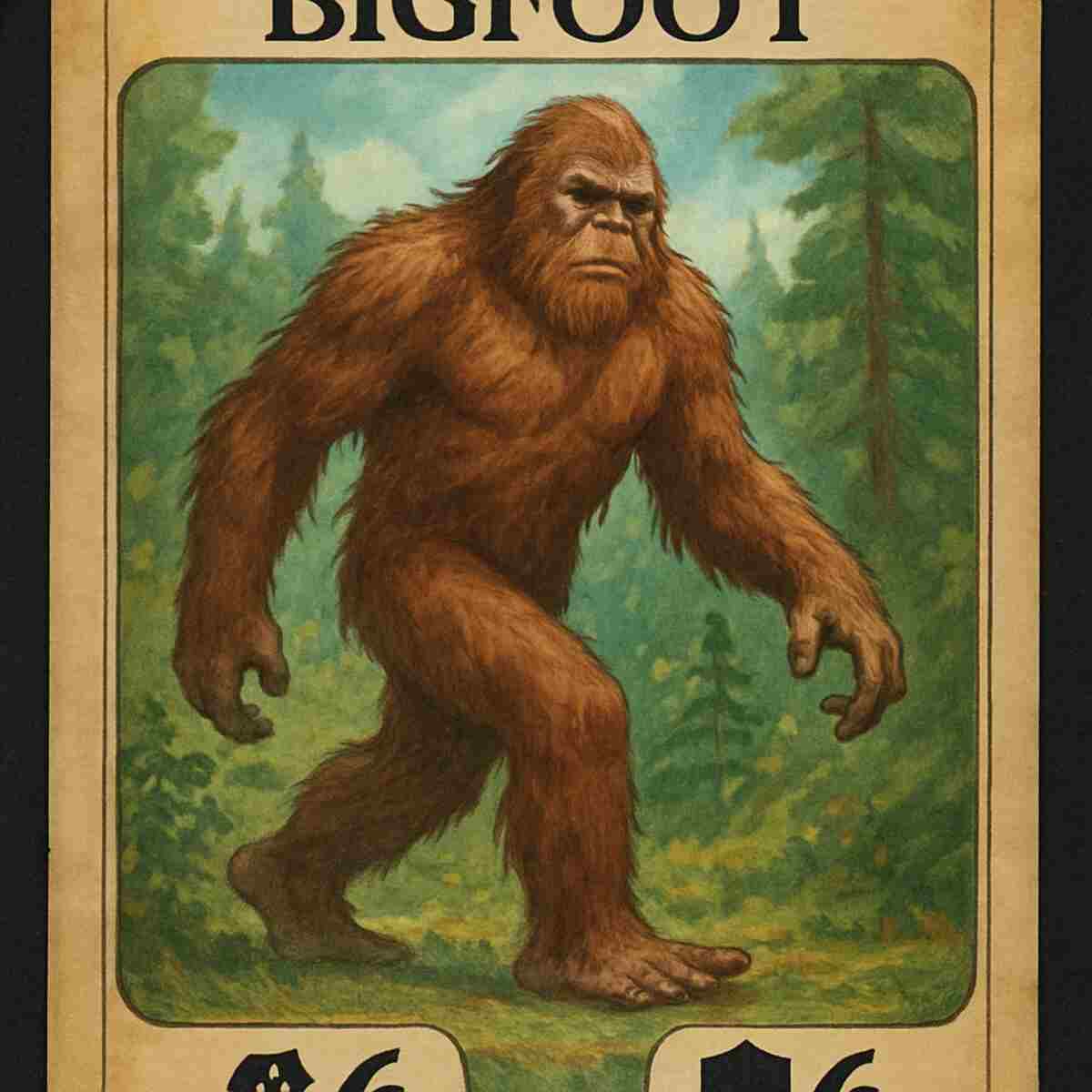
Just look at the Bigfoot card here. As you’d expect from the legendary giant of the forest, he is a true heavyweight. With a Power of 6 and a Health of 6, he can dish out a massive blow and endure a lot of punishment in return. These numbers immediately tell you his story: he’s a formidable force that can dominate the field, but summoning such a powerful creature will demand a significant amount of your Belief. This is what determines the outcome when Bigfoot battles Mothman; their core stats define the clash.
Not every cryptid is a hulking brute. A smaller creature like the Dover Demon might have low Power and Health, making it cheaper to play and better for early-game pressure. This variety opens up fascinating choices when building a deck with legendary creatures. Do you go for a swarm of small, fast monsters or save up for a single, game-ending titan? But your creatures aren’t your only tools.
Beyond the Beasts: Using Event Cards for Surprise Tactics
While your cryptids are the main players in this clash of legends, sometimes the key to victory isn’t a monster, but a moment. This is where Event cards come in. Think of them as the plot twists in your story—powerful, one-time actions that can dramatically shift the tide of a game. Whether it’s a sudden burst of insight that lets you draw more cards or a clever trap that hinders your opponent, these cards represent the unpredictable nature of hunting for things that go bump in the night. You play an Event, its effect resolves instantly, and then it’s gone, leaving your opponent scrambling to adapt.
This temporary nature is what makes Events a completely different tool from your Cryptid cards. A creature like Bigfoot stays on the field, representing a constant threat your opponent must deal with turn after turn. An Event, however, is a fleeting opportunity. Imagine playing “Unearthly Howl,” an Event that forces an opposing cryptid to retreat, unable to attack for a turn. The effect is immediate and powerful, giving you a crucial opening. This dynamic makes the cryptozoology lore in popular games feel alive, as you’re not just commanding monsters, but also manipulating the strange phenomena surrounding them.
Mastering the element of surprise is a core part of any good folklore-inspired board game strategy. The real art of using Events is knowing when to play them. Do you use that “Misdirection” card now to protect your weakest cryptid, or do you save it to cancel what looks like your opponent’s game-winning move? Holding the right Event card feels like having a secret weapon, forcing your rival to play cautiously, never knowing what trick you have up your sleeve. These unique monster battle game rules ensure that brute force isn’t always enough.
Your First Expedition: Walking Through a Game Turn
Now that you’re armed with monstrous Cryptid cards and surprising Event cards, it’s time to put them into action. Understanding how to play a cryptozoology board game is all about knowing the rhythm of a turn. Each turn is like a short chapter in your epic tale of discovery and conflict, giving you a chance to gather your strength, make a bold move, and challenge your opponent. It’s a structured process that ensures the game flows smoothly and fairly for both players.
Every turn in the game is broken down into three simple steps. Think of it as a mini-expedition you take each time it’s your chance to play. This clear structure makes learning easy and helps you plan your strategy without getting overwhelmed.
- Prepare: You’ll start by drawing a new card from your deck and gaining one Belief resource. This step is about gathering intelligence and power for the moves you’re about to make.
- Act: This is your main phase. You can spend your Belief to play one Cryptid card from your hand onto the field or play an Event card for its immediate effect.
- Confront: Finally, you can command any of your ready Cryptids to attack your opponent.
There’s one important rule to remember during the Act phase. When you first play a Cryptid card, it needs a moment to get its bearings. A newly summoned creature can’t attack on the same turn it enters play. Players often call this “summoning sickness.” This rule is crucial because it gives your opponent a chance to respond. It prevents someone from just slamming down a massive Bigfoot and winning immediately, making the game a strategic duel rather than a race.
This simple, three-step rhythm is the heartbeat of the game. It creates a predictable flow that allows you to build your forces, anticipate your rival’s moves, and carefully decide when to go on the offensive. You’ll prepare your resources, act by playing a key card, and then confront your opponent with the monsters you already have in play.
When Monsters Clash: The Rules of Combat
The real drama of any folklore-inspired board game strategy begins during the Confront phase. This is where you finally unleash the cryptids you’ve patiently placed on the field. As the attacker, you are in the driver’s seat. You get to survey the battlefield and decide which of your “ready” creatures—those that have been in play for at least one turn—will charge at your opponent. You can choose to send one, all, or none of them. The choice is entirely yours, allowing you to mount an all-out assault or a single, calculated strike.
This presents your opponent with a crucial dilemma. They must decide how to respond to your attack. They have two options: they can either let the attack through and take the damage directly to their “Field Research” points, bringing them closer to losing the game, or they can use one of their own ready cryptids to step in and block the incoming attacker. This choice is the heart of the game’s defensive strategy. Do you sacrifice a creature to protect your score, or do you take the hit and save your monster for a counter-attack on your next turn?
When two cryptids fight, the monster battle game rules are simple and simultaneous. Imagine your opponent has blocked your attacking Jersey Devil (a 3-Power / 3-Health creature) with their Loch Ness Monster (a 2-Power / 4-Health creature). In this moment, they both deal their Power as damage to each other’s Health at the same time. Your Jersey Devil deals 3 damage to Nessie’s 4 Health, while Nessie deals 2 damage to your Jersey Devil’s 3 Health.

In this clash, both monsters would narrowly survive. The Jersey Devil would be left with 1 Health (3 minus 2), and the Loch Ness Monster would also have 1 Health remaining (4 minus 3). However, if a creature’s Health ever drops to 0 or less, it is defeated and removed from the field. Understanding how a high-power attacker might trade with a high-health defender is key to winning. Choosing which cryptids to include on your team for these very situations is the first step in mastering the game.
“Designing” Your Monster Movie: How to Build Your First Deck
Now that you understand how cryptids clash, it’s time to step into the director’s chair. Designing your own cryptid card game experience starts with deck building, which is less about complex math and more like casting the perfect monster movie. You have a collection of cryptids, mysterious events, and strange artefacts, and you get to choose which ones make the final cut. Building a deck with legendary creatures means you’re not just playing a game; you’re telling a story—your story.
The first big decision is deciding what kind of story you want to tell. Do you prefer a fast-paced thriller or a slow-burning epic? This choice shapes your entire strategy. You could build a deck full of small, inexpensive creatures like the Chupacabra and the Dover Demon. This approach is all about speed, swarming your opponent with a relentless wave of attacks from the very first turn. On the other hand, you might prefer a defensive game, using clever Event cards to stall your opponent while you gather enough energy to summon a single, game-ending behemoth like the Kraken from the deep. Neither strategy is better; they’re just different styles of play.
A truly great deck, however, is more than just a pile of powerful cards. It’s a team that works together. This concept is called synergy. Think of it like a pack of wolves hunting together—each one is more effective because of the others. In the game, this might mean building a deck around Mothman. You’d include not just the Mothman card itself, but also other cards like “Prophetic Visions” and “Ominous Skies” that let you draw extra cards or rearrange the top of your deck. This combo allows you to “see the future” just like the legend says, giving you the perfect card right when you need it. This creative process of finding powerful combinations is what makes games in this genre so endlessly replayable.
Finding these clever connections and building a team of cryptids that perfectly reflects your style is one of the most rewarding parts of the game. As you start collecting, you’ll discover that some cards are much harder to find than others, possessing unique and powerful abilities that can become the centrepiece of your new deck.
From Folklore to “Foiled”: Understanding Card Rarity
As you begin to build your collection, you’ll quickly notice that not all cards are created equal. This concept is known as card rarity, and it simply tells you how likely you are to find a specific card in a booster pack. Think of it like being an investigator in the field: some clues are everywhere, while others are a once-in-a-lifetime discovery. Most cards are Common, forming the backbone of many decks. Then you have Uncommon cards, which are a bit harder to find. After that come the powerful Rare cards, and finally, the elusive and often game-changing Legendary cryptids.
This difference in rarity isn’t just for show; it often signals a card’s complexity or power level. A Common card might have a straightforward, useful ability, like the “Swamp Lurker” that lets you draw an extra card. A Legendary card, however, can completely alter the course of a match. For instance, pulling off the epic ability of a legendary creature like “Bigfoot, the Hidden King” might allow you to overpower your opponent’s entire field in a single, dramatic move. This makes rarer cards exciting centrepieces to build your strategies around.
Ultimately, understanding card rarity in monster games like this adds to the simple joy of collecting. It transforms the act of opening a new pack into a genuine treasure hunt. There’s a special thrill that comes from sorting through your new cards and suddenly seeing the unmistakable shimmer of a Rare or Legendary cryptid you’ve been hoping to find. This blend of strategic deck building and the exciting hunt for mythical creatures is what makes your journey into the unknown so compelling.
Your Next Steps into the Unknown
The shadowy world of cryptids is no longer just a collection of campfire stories. You now see how simple rules can bring legendary monsters to life, transforming your kitchen table into an epic battlefield. You’re ready to decide if a cryptozoology board game is the right adventure for you, armed with an understanding of how these games turn folklore into fun.
So, is a creature collection game worth it? If the idea of commanding your own team of monsters in a light strategic duel sounds exciting, the answer is a resounding yes. The perfect first step is a starter set, which has everything you need for a monster-themed tabletop game for two players right out of the box.
The only question left is, who will be on your team of legends? Your journey into this exciting hobby can begin by finding one of those starter sets or visiting a local game store to see the community for yourself. The myths are waiting to be commanded.
